

Table of Contents
Key Takeaways:
- Your ecommerce technology stack lays the foundation for your store’s performance, scalability, security, and customer experience.
- Evaluate factors like cost, scalability, integrations, security, and customization before choosing a technology stack.
- A complete ecommerce tech stack should include essential components such as an ecommerce platform, payment gateway, inventory management, analytics, and customer support tools.
- Modern technologies like React, Next.js, Node.js, Python, and cloud platforms help build fast, scalable, and future-ready ecommerce websites.
- Leading brands like Amazon, Walmart, and Etsy succeed by investing in scalable architectures, automation, data-driven decision-making, and continuous innovation.
- Partnering with an experienced ecommerce development company can help you build a secure, high-performing technology stack that supports long-term business growth.
Your ecommerce website is only as strong as the technology stack behind it. The right tech stack helps you deliver better customer experiences, scale your business, integrate essential tools, and adapt to changing market demands. The wrong one can slow growth, create operational challenges, and increase costs over time.
Whether you have a technical background or not, launching an ecommerce business has never been easier. Choosing the right tech stack for ecommerce, however, is a much bigger decision. With so many platforms, frameworks, and tools available, it’s easy to feel overwhelmed.
You need a solution that fits your budget, supports your business goals, integrates with your existing systems, and delivers a seamless shopping experience across every device.
When you choose the right ecommerce tech stack, you’re building a foundation that supports long-term growth and helps you stay ahead of the competition.
In this guide, we’ll walk you through everything you need to know about ecommerce technology stacks, what they include, the factors you should evaluate, and how to choose the best option for your business. But first, let’s start with the basics.
What is an ecommerce tech stack?
An ecommerce tech stack is the combination of technologies, platforms, and software that work together to run your online store. It powers everything from the storefront your customers interact with to the systems that manage inventory, process payments, handle orders, and track business performance.
Each component plays a specific role, and together they create a seamless shopping experience for your customers while simplifying day-to-day operations for your team.
Unlike traditional setups that rely on a single platform, modern ecommerce businesses often build a technology ecosystem by integrating multiple best-of-breed solutions.
This approach gives you the flexibility to add new capabilities, replace tools as your business evolves, and scale without overhauling your entire infrastructure.
The key is choosing technologies that work well together and support your long-term business goals. Before you start evaluating platforms and tools, it’s important to understand the factors that will influence your decision.
This will ensure your technology stack supports your business goals both today and as you grow.
Build the Right Tech Stack
Not sure which technologies fit your business? Our ecommerce experts help you choose a scalable, future-ready tech stack tailored to your goals.
Talk to an Expert
Tips to Choose the Best eCommerce Tech Stack
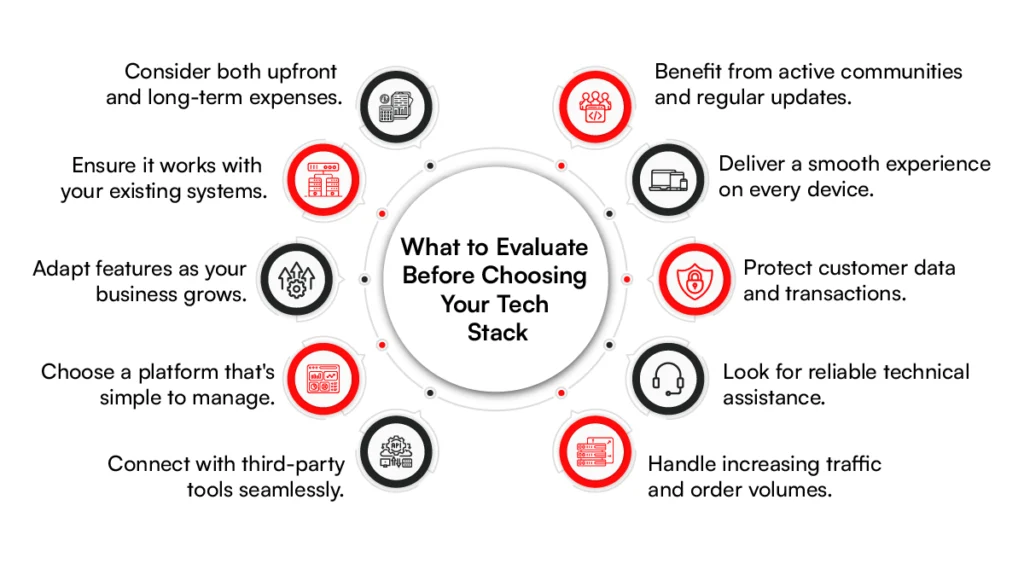
Choosing an ecommerce tech stack is about finding a solution that fits how your business operates today and supports where you want to go tomorrow. Before you make a decision, ask yourself these questions.
1. Cost
Don’t look at the upfront price alone. Consider the total cost of ownership, including licensing, hosting, maintenance, upgrades, integrations, and ongoing support. A platform that seems affordable today may become expensive as your business grows. Choose a solution that delivers long-term value rather than short-term savings.
2. Compatibility
Will your technology stack work well with the tools you already use? Whether it’s your CRM, ERP, payment gateway, shipping software, or marketing platform, smooth compatibility helps your systems communicate with each other and keeps your operations running efficiently.
3. Customizability
Your business won’t stay the same forever, and neither should your website. Look for a technology stack that lets you customize features, workflows, and customer experiences as your business evolves. The more flexibility you have, the easier it becomes to adapt to changing customer expectations and market trends.
4. Ease of Use
Think about the people who will use the platform every day. If your team spends hours figuring out how to update products or manage orders, productivity suffers. Choose a solution that’s easy to manage, even if your team doesn’t have deep technical expertise.
5. Integration Options
No ecommerce platform can do everything on its own. You’ll likely need to connect payment gateways, marketing tools, inventory systems, analytics platforms, and other applications. Make sure your technology stack offers reliable APIs and integration options so you can expand your ecosystem without unnecessary complexity.
6. Scalability
Your technology stack should grow with your business. Whether you’re adding more products, expanding into new markets, or handling seasonal traffic spikes, your platform should continue to perform without slowing down or requiring a complete rebuild.
7. Security
Your customers trust you with sensitive information, and it’s your responsibility to protect it. Look for technologies that offer secure payment processing, regular security updates, data encryption, and compliance with industry standards. Investing in security today can help you avoid costly issues in the future.
8. Mobile Responsiveness
Many of your customers will visit your store from their smartphones. If your website isn’t fast, responsive, and easy to navigate on mobile devices, they’ll likely leave before making a purchase. Make sure your technology stack supports a seamless experience across all screen sizes.
9. Developer Community and Support
Even if you don’t have an in-house development team, a strong developer community is a big advantage. Popular technologies often have better documentation, frequent updates, ready-made extensions, and a larger pool of experienced developers.
That means you’ll find it easier to maintain, improve, and scale your ecommerce application over time.
What are the must-have b2b ecommerce tech stack components?
Once you know what to look for in a technology stack, the next step is understanding which components actually make an ecommerce business run smoothly. Think of your tech stack as a connected ecosystem rather than a collection of separate tools.
Each component handles a specific part of the customer journey, and together they create the experience your shoppers expect.
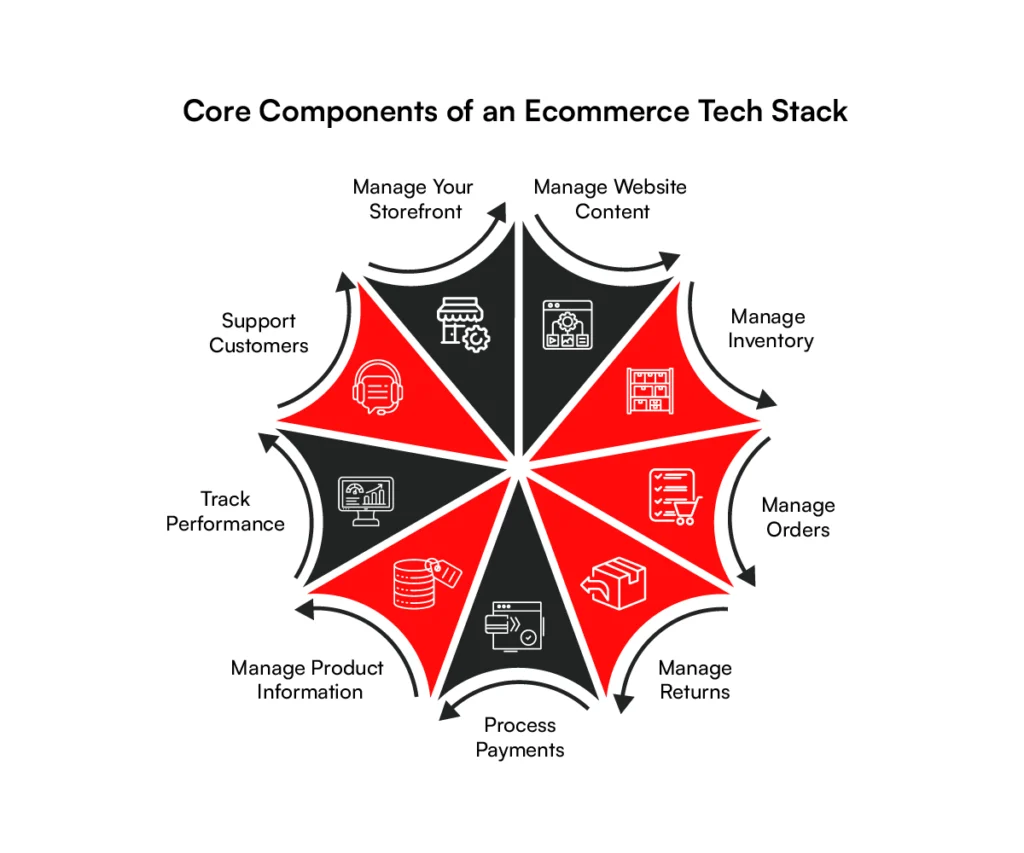
Here are the core components every modern ecommerce business should have in its technology stack.
1. Ecommerce Platform
Your ecommerce platform is the foundation of your online store. It manages your storefront, product catalog, checkout experience, promotions, and customer accounts. Whether you choose a platform like Shopify, Magento, BigCommerce, or a custom-built solution, this is the system that powers the core shopping experience.
Most enterprise catalogs wait on a nightly batch job before changes go live. Arvyn updates browse, facets, and previews in real time — no reindex, no delay.
Get Free Demo2. Website Management
Your website management system helps you update content, create landing pages, publish blogs, and manage campaigns without relying on developers for every change. A strong content management capability allows your marketing team to move quickly and keep the site fresh and relevant.
3. Inventory Management
Inventory management keeps track of stock levels across warehouses, stores, and fulfillment centers. It helps you avoid overselling, maintain accurate product availability, and replenish inventory before popular items run out. For growing businesses, real-time inventory visibility becomes essential.
4. Order Management
Once a customer places an order, your order management system takes over. It coordinates order processing, payment verification, warehouse fulfillment, shipping, and delivery tracking. A well-integrated order management system helps you deliver orders faster and keep customers informed throughout the process.
If your business has unique fulfillment workflows, investing in custom order management software can help automate operations, improve order accuracy, and scale more efficiently.
5. Returns Management
Returns are a normal part of ecommerce, especially in categories like fashion and electronics. A dedicated returns management solution simplifies return requests, approvals, shipping labels, refunds, and exchanges. Making returns easy can improve customer trust and encourage repeat purchases.
6. Payment Gateways
Your payment gateway securely processes online payments and supports multiple payment methods, including credit cards, digital wallets, UPI, and buy-now-pay-later options. Fast, secure, and flexible payment experiences can have a direct impact on conversion rates and cart abandonment.
7. Product Information Management (PIM)
A PIM system centralizes all product data, including descriptions, specifications, images, videos, pricing, and attributes. This becomes especially important when you sell thousands of products across multiple channels, marketplaces, and regions. A PIM helps ensure that customers see accurate and consistent product information everywhere.
8. Reporting and Analytics
Data helps you make smarter decisions. Reporting and analytics tools track traffic, conversion rates, customer behavior, marketing performance, inventory trends, and revenue. With the right insights, you can identify what’s working, fix bottlenecks, and invest in the channels that drive the most growth.
9. Customer Support
Customer support tools connect your team with shoppers through email, chat, social media, and phone channels. Modern support platforms also include automation, AI chatbots, and shared customer histories so agents can resolve issues quickly and deliver a consistent experience.
Build a Complete B2B Tech Stack
Missing the right components can create operational bottlenecks and limit growth. We’ll help you build a connected B2B ecommerce ecosystem that scales with your business.
Contact USBest Tech Stack for an Ecommerce Website and App in 2026
There isn’t a single technology stack that’s perfect for every ecommerce business. The right choice depends on factors like your business model, budget, scalability requirements, and customization needs.
However, some technologies have consistently proven themselves for building secure, high-performing, and scalable ecommerce applications. Here’s a look at the best tech stack for ecommerce websites in 2026.
1. Front-end Ecommerce Technologies
The front end is everything your customers see and interact with. It directly impacts user experience, website speed, and conversion rates. A modern frontend should deliver fast page loads, responsive designs, and seamless navigation across desktop and mobile devices.
2. React
React continues to be one of the most popular frontend libraries for ecommerce development. Its component-based architecture makes it easier to build interactive user interfaces, reuse code, and deliver fast shopping experiences. It’s an excellent choice for businesses building headless or custom ecommerce websites.
3. Next.js
Built on React, Next.js has become a preferred framework for ecommerce websites because of its excellent performance and SEO capabilities. Features like server-side rendering and static site generation help pages load faster while improving search engine visibility, making it ideal for businesses focused on organic growth.
4. Vue.js
Vue.js offers a lightweight and flexible approach to frontend development. Its simple learning curve and excellent performance make it a good option for businesses looking to develop responsive ecommerce applications without unnecessary complexity.
5. Angular
Angular is well suited for enterprise ecommerce projects that require robust architecture and long-term scalability. It includes built-in tools for routing, testing, and dependency management, making it a strong choice for large applications with complex business requirements.
6. Back-end Ecommerce Technologies
While customers interact with the frontend, the backend handles everything behind the scenes. It manages product data, customer accounts, inventory, orders, payments, authentication, and integrations with third-party systems. Choosing the right backend technology ensures your ecommerce platform remains reliable as your business grows.
7. Node.js
Node.js is widely used for modern ecommerce applications because it supports fast, event-driven processing and handles multiple user requests efficiently. It’s particularly well suited for businesses expecting high traffic volumes and real-time interactions.
8. Python
Python is known for its clean syntax and extensive ecosystem of frameworks and libraries. Combined with frameworks like Django or FastAPI, it enables developers to build secure, scalable ecommerce platforms while also supporting AI-powered features such as product recommendations, personalization, and demand forecasting.
9. PHP
PHP remains a popular choice because many leading ecommerce platforms, including Magento, WooCommerce, and OpenCart, are built on it. Businesses looking for proven, cost-effective ecommerce solutions often continue to rely on PHP for its mature ecosystem and extensive community support.
10. Java
Java is commonly used by large enterprises that require high performance, strong security, and exceptional scalability. It handles complex business logic and high transaction volumes reliably, making it suitable for large-scale ecommerce platforms.
11. .NET
Microsoft’s .NET Framework is a strong option for businesses already operating within the Microsoft ecosystem. It provides excellent security, scalability, and integration capabilities, making it suitable for enterprise ecommerce applications that require long-term stability.
Real-world Examples of the Best Tech Stack for Ecommerce
Industry leaders like Etsy, Walmart, and Amazon have built their technology ecosystems around their unique business models, customer expectations, and long-term growth strategies.
While your business may not operate at the same scale, understanding the principles behind their technology choices can help you make smarter decisions when building or modernizing your own ecommerce platform.
1. Etsy
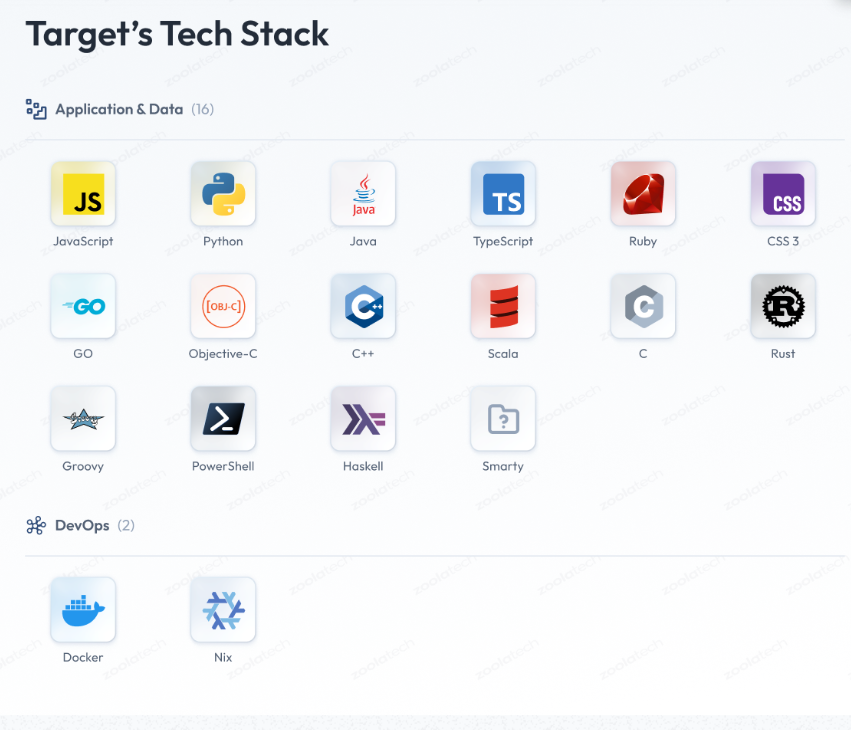
Etsy has built its technology stack around one clear goal: delivering new features quickly without compromising reliability.
As a global marketplace serving millions of buyers and independent sellers, Etsy relies on a cloud-native architecture, automated deployment pipelines, and robust monitoring tools to keep its platform running smoothly while continuously improving the shopping experience.
One of the biggest lessons you can learn from Etsy is the importance of automation and observability. By investing in continuous deployment, performance monitoring, and internal developer tools, Etsy can release updates faster, identify issues before they affect customers, and maintain high code quality across its engineering teams.
It also uses analytics and customer experience tools to understand user behavior and optimize every stage of the buying journey.
What you can learn from Etsy: If your ecommerce business plans to scale, don’t focus only on adding new features. Build a technology stack that automates repetitive tasks, provides real-time visibility into performance, and helps your team deliver improvements quickly without disrupting the customer experience.
2. Walmart
Walmart has built its ecommerce technology stack to handle massive scale while delivering a seamless omnichannel experience. Every part of its architecture is designed to connect online and offline operations, process vast amounts of data, and support millions of customers shopping across websites, mobile apps, and physical stores.
A key strength of Walmart’s technology stack is its ability to turn data into business decisions. Walmart optimized inventory, forecast demand, personalized shopping experiences, and deployed new features quickly without affecting platform performance by combining cloud infrastructure, containerized applications, AI, and machine learning.
This approach allows the company to respond faster to changing customer expectations while maintaining reliability at scale.
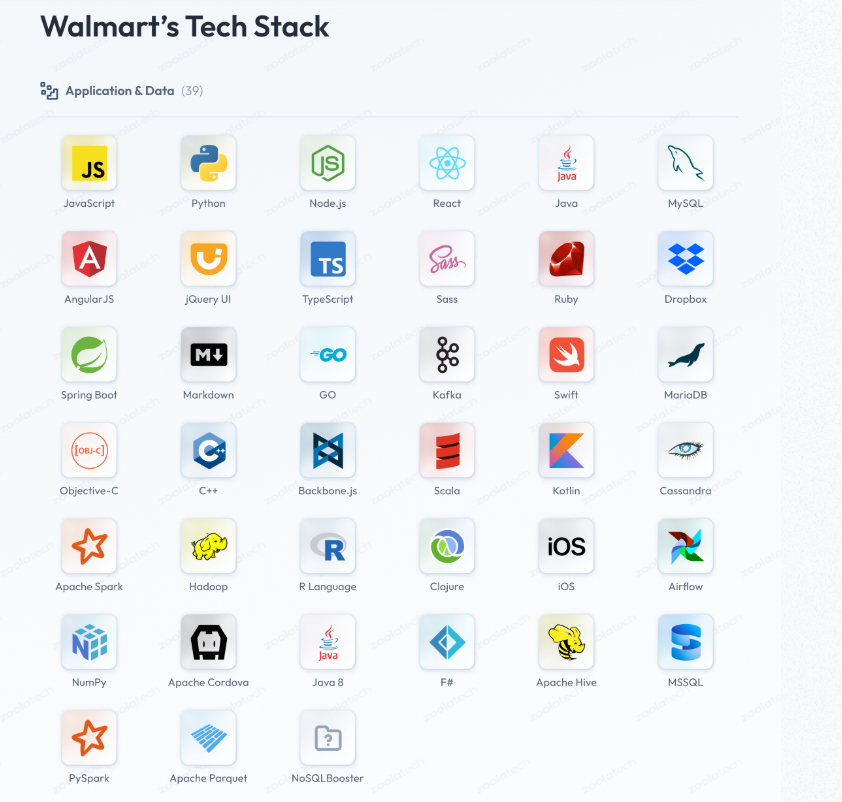
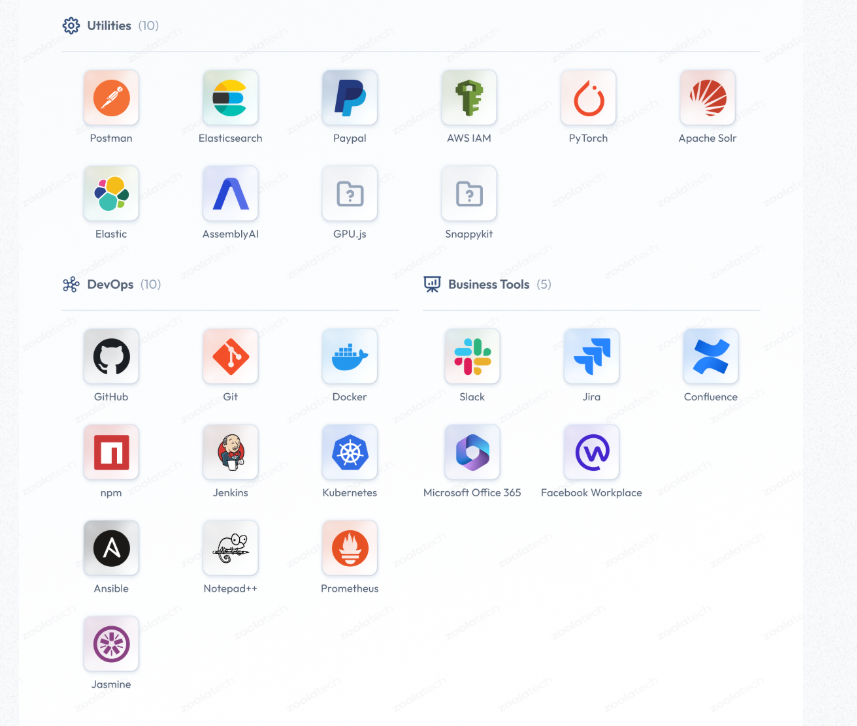
What you can learn from Walmart:
As your ecommerce business grows, your technology stack should do more than keep your website running. Choose technologies that help you use data effectively, automate operations, and scale efficiently.
Building a flexible, cloud-ready architecture today will make it easier to support future growth and deliver consistent customer experiences across every sales channel.
3. Amazon
Amazon has built its ecommerce technology stack to support one of the world’s largest online marketplaces. Its cloud-native architecture, powered by AWS, enables the platform to handle millions of transactions, process vast amounts of data in real time, and maintain high availability even during peak shopping events.
Every layer of its technology stack is designed to deliver speed, reliability, and continuous innovation.
One of Amazon’s biggest strengths is its ability to combine scalable infrastructure with data-driven decision-making. Amazon introduced new features, optimized performance, and personalized customer experiences without disrupting day-to-day operations through a microservices architecture, automation, real-time analytics, and continuous testing.
This allows the company to innovate quickly while maintaining a seamless shopping experience for millions of customers worldwide.
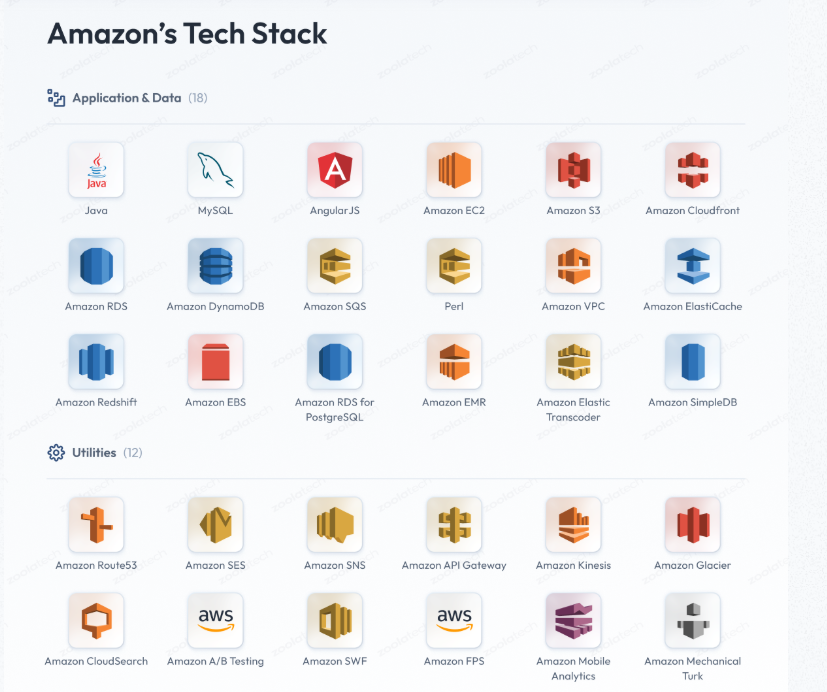
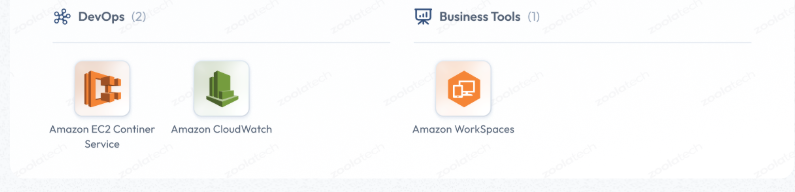
What you can learn from Amazon: As your business grows, your technology stack should evolve with it. Invest in scalable cloud infrastructure, adopt modular architectures that make updates easier, and use analytics to make informed business decisions.
Building flexibility into your technology stack today will help you innovate faster and support long-term growth.
Outpace Competitors with the Right Tech Stack
A modern tech stack can help you launch faster, scale smarter, and stay ahead of the competition.
Build My Tech StackSecurity and Compliance for Your Ecommerce Tech Stack
Choosing the right technologies is only one part of building a successful ecommerce business. You also need to make sure your technology stack can protect customer data, prevent cyber threats, and maintain trust at every stage of the shopping journey.
As your business grows and handles more customer information and transactions, security should become a core part of your technology strategy, not an afterthought.
Here are some essential security practices to keep in mind.
1. Store and Process Payment Information Securely
Customers trust you with their payment details every time they place an order. Protect that trust by using PCI DSS-compliant payment gateways that securely process transactions and minimize the risk of sensitive data being exposed.
If possible, avoid storing payment information on your own servers and rely on trusted payment providers that specialize in secure payment processing.
2. Adopt Encryption and Security Automation
Encryption protects sensitive information as it moves between your website, customers, and backend systems. Use HTTPS, SSL/TLS certificates, and data encryption to secure customer information both in transit and at rest.
You should also automate security tasks wherever possible, including vulnerability scanning, patch management, threat detection, and system monitoring. Automation helps you identify and respond to security risks before they become major issues.
3. Follow Regulatory Requirements
Depending on where you operate and who your customers are, you may need to comply with regulations such as GDPR, CCPA, or other regional data privacy laws.
Make sure your technology stack supports consent management, secure data storage, and customer data access requests. Staying compliant not only helps you avoid penalties but also builds customer confidence in your brand.
4. Conduct Regular Security Audits
Security isn’t something you set up once and forget. As your website evolves, new vulnerabilities can emerge. Regularly perform security assessments, penetration testing, and manual code reviews to identify weaknesses before attackers do.
Keeping your software, plugins, and third-party integrations up to date is equally important for reducing security risks.
5. Use Identity Verification Features
Strengthen account security by adding features such as multi-factor authentication, secure password policies, CAPTCHA, and login monitoring. These measures make it much harder for attackers to gain unauthorized access to customer or administrator accounts while giving legitimate users a safer shopping experience.
6. Educate Your Customers About Security
Even the most secure technology stack can’t prevent every threat if users aren’t aware of common scams. Help your customers recognize phishing emails, create strong passwords, and understand how you’ll communicate with them.
Simple security tips and clear communication can go a long way in preventing fraud and building long-term trust.
Strong security is more than a technical requirement. It’s an investment in your customers’ confidence and your brand’s reputation. By building security into your ecommerce technology stack from the beginning, you create a safer shopping experience while protecting your business as it continues to grow.
Conclusion
Choosing the right ecommerce technology stack is about building a foundation that supports growth, delivers great customer experiences, and adapts as your business evolves. By selecting the right technologies and prioritizing scalability, integrations, and security, you can create an ecommerce platform that’s built for long-term success.
At RBMSoft, we help businesses make the right technology choices and turn them into scalable digital solutions.
Whether you’re building a new online store, modernizing an existing platform, or adopting a headless architecture, our ecommerce software development services are designed to help you achieve your business goals.
Our capabilities include:
- Custom ecommerce application development
- Headless and composable commerce solutions for retail and ecommerce
- Platform migration and modernization
- Third-party API and system integrations
- AI-powered ecommerce solutions
- Performance optimization and cloud deployment
- Ongoing maintenance and security support
With end-to-end IT services for e-commerce and expertise in ecommerce solutions development, RBMSoft helps you build secure, scalable, and future-ready ecommerce platforms that grow with your business.
FAQ’s
1. What is an ecommerce tech stack?
An ecommerce tech stack is the collection of technologies, platforms, and software that work together to power an online store.
It includes everything from your ecommerce platform and content management system to payment gateways, inventory management, analytics, and customer support tools. A well-planned ecommerce technology stack helps you streamline operations, improve customer experiences, and support long-term business growth.
2. What’s the best tech stack for ecommerce brands?
The best tech stack for ecommerce depends on your business goals, budget, and scalability requirements. While some brands prefer all-in-one platforms, others choose a composable approach that combines best-of-breed solutions.
The ideal ecommerce technology stack should be secure, scalable, easy to integrate, and flexible enough to evolve as your business grows.
3. What are the main components of the best ecommerce tech stack?
A modern ecommerce tech stack typically includes an ecommerce platform, website management system, inventory management, order management, product information management (PIM), payment gateways, reporting and analytics tools, and customer support solutions.
Together, these components create an ecommerce technology stack that delivers seamless shopping experiences while helping your team manage operations efficiently.
4. How do you develop the best ecommerce technology stack for scaling?
Start by understanding your current business requirements and future growth plans. Choose technologies that support scalability, integrate easily with your existing systems, and allow customization as your needs change.
The right ecommerce tech stack for business should also prioritize security, performance, automation, and data visibility. As your operations expand, review your tech stack for ecommerce regularly to ensure it continues to meet your evolving requirements.
5. How does headless commerce affect the overall ecommerce tech stack?
Headless commerce separates the frontend from the backend, giving you greater flexibility to create custom customer experiences without affecting core business operations. This approach strengthens your ecommerce technology stack by allowing independent updates, faster development cycles, and easier integration with third-party services.
It also enables you to build a more agile CX tech stack for ecommerce, making it easier to deliver consistent experiences across websites, mobile apps, marketplaces, and other digital channels.