



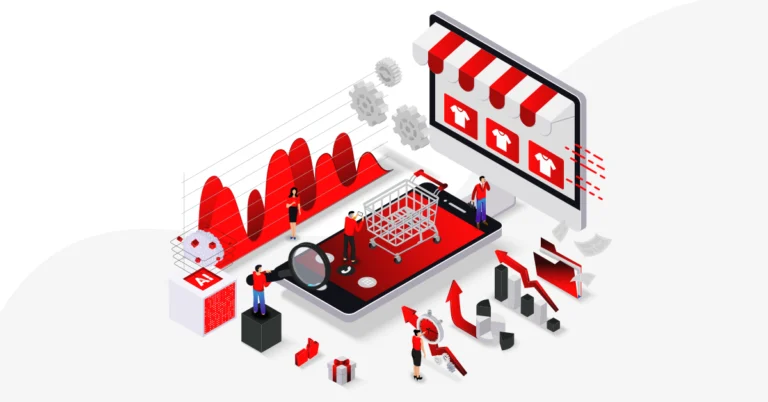

Quick Summary:
- Virtual Reality is transforming ecommerce from passive browsing into immersive, experience-driven shopping.
- VR improves product visualization, which helps increase conversions and reduce return rates.
- Leading brands are already using VR to create virtual showrooms, try-ons, and interactive experiences.
- Successful implementation requires the right strategy, technology, and seamless integration with existing systems.
- As technology advances, VR will become a core part of ecommerce, driving more personalized and engaging customer experiences.
Virtual commerce is a technological shift reshaping how people shop online. As e-commerce continues to evolve, the demand for more interactive, engaging, and personalized shopping experiences grows.
Virtual reality commerce is quickly emerging as a solution that merges the convenience of online shopping with the sensory richness of physical retail.
This article explores what virtual reality ecommerce is, why it’s growing, how brands are adopting it, and whether it really is the future of e-commerce.
What is Virtual Reality Ecommerce?
Virtual commerce refers to the use of VR technology to create immersive, three-dimensional shopping environments where users can interact with products in real time.
Instead of scrolling through a flat product page, shoppers can step into a virtual store, browse shelves, try on clothing with avatars, or inspect a piece of furniture as if they were standing in front of it.
Advantages of Using VR in Ecommerce
As ecommerce becomes more competitive, brands are looking for ways to stand out and create meaningful customer experiences. Virtual commerce is emerging as a powerful solution, transforming online shopping into a more interactive and immersive experience.
Instead of simply browsing products, customers can explore, engage, and make more informed decisions in a virtual environment.
This shift is driven by changing consumer expectations and technological advancements, making VR an increasingly valuable tool for modern retailers.
- Increased Customer Engagement
People are spending more time in digital environments, especially Gen Z and Millennials. VR transforms shopping from a task into an experience. This deeper level of engagement can lead to longer browsing times, higher conversion rates, and stronger brand loyalty.
- Improved Product Visualization
One of the biggest challenges in online retail is that customers can’t touch or try products. VR solves that with interactive 3D models, virtual try-ons, and virtual environments that let products be seen from every angle.
- Lower Return Rates
When customers can better understand what they’re buying, they make more confident purchases. VR’s ability to simulate size, scale, and fit reduces surprises, ultimately leading to fewer returns.
Boost Revenue with Immersive VR Commerce
Implement enterprise-grade VR to deliver realistic visualization, virtual try-ons, and confident purchasing, dramatically reducing returns.
Request a Personalized Quote
Top 6 Use Cases of VR in Ecommerce
Virtual Reality is reshaping ecommerce by enabling more immersive, interactive, and engaging shopping experiences. Instead of passively browsing, customers can actively explore products, environments, and brand stories, leading to better understanding and stronger purchase intent.
1. Virtual Showrooms and Stores
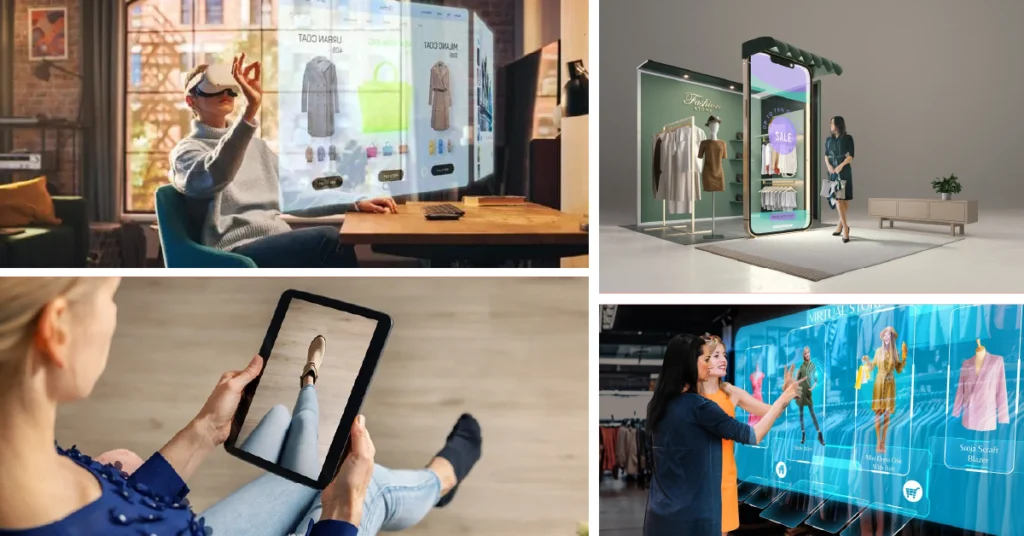
Brands create fully immersive 3D versions of their physical stores, allowing customers to browse from anywhere. These virtual spaces allow users to walk through aisles, explore curated sections, and view products from every angle.
This approach is especially effective for high-value items like automobiles and luxury goods, where visual detail plays a key role.
2. Virtual Try-On Technology
VR enables customers to try products in real time using avatars or digital mirrors. Whether it is clothing, eyewear, or beauty products, users can see how items look and fit before purchasing.
Many retailers also combine these experiences with visual search in ecommerce, allowing shoppers to upload a photo, find similar products, and then preview them through virtual try-on. This reduces uncertainty, increases confidence, and helps customers make purchase decisions with fewer returns.
For example, they can visualize how furniture or home decor will look in their room. This helps them assess size, fit, and style compatibility, making decision-making easier and more accurate.
3. Product Customization
VR allows users to design and customize products interactively. Customers can change colors, materials, sizes, or configurations in real time.
This is particularly useful for industries like furniture, footwear, and automotive, where personalization enhances the buying experience.
4. Immersive Marketing and Brand Experiences
Brands use VR to create engaging campaigns such as virtual product launches, fashion shows, or destination-based experiences.
These environments allow customers to connect with the brand more memorably, strengthening emotional engagement and brand recall.
5. Social Shopping
VR introduces a collaborative aspect to ecommerce by allowing users to shop together in shared virtual spaces. Customers can interact as avatars, discuss products, and make decisions with friends or family in real time, making the experience more social and engaging.
6. Interactive Product Education
VR helps brands demonstrate how products work through interactive simulations. Customers can explore features, understand functionality, and even practice usage in a virtual setting.
This is especially valuable for complex products, as it builds confidence and reduces hesitation before purchase.
Top 4 Real-world Examples and Case Studies of VR in Ecommerce
As virtual reality continues to reshape digital shopping, several global brands are already experimenting with immersive experiences to engage customers in new ways.
These companies are using it strategically to enhance product discovery, improve decision-making, and create more personalized shopping journeys.
1. Walmart
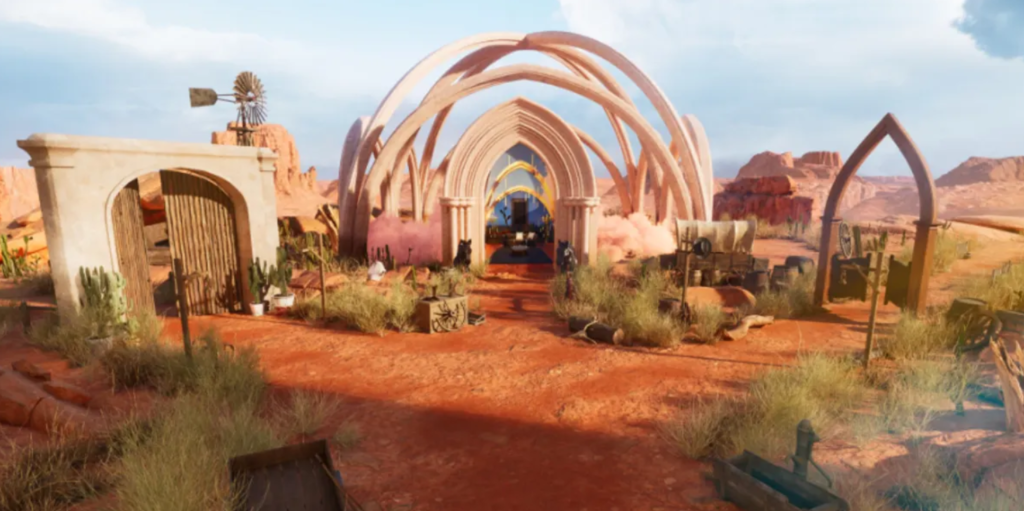
Walmart Realm is a digital shopping experience built around themed virtual environments. Instead of traditional product listings, customers can explore curated spaces that make browsing more engaging.
It represents a shift toward experiential retail, where discovery feels more natural and less transactional.
2. Apple Vision Pro Retail Integration
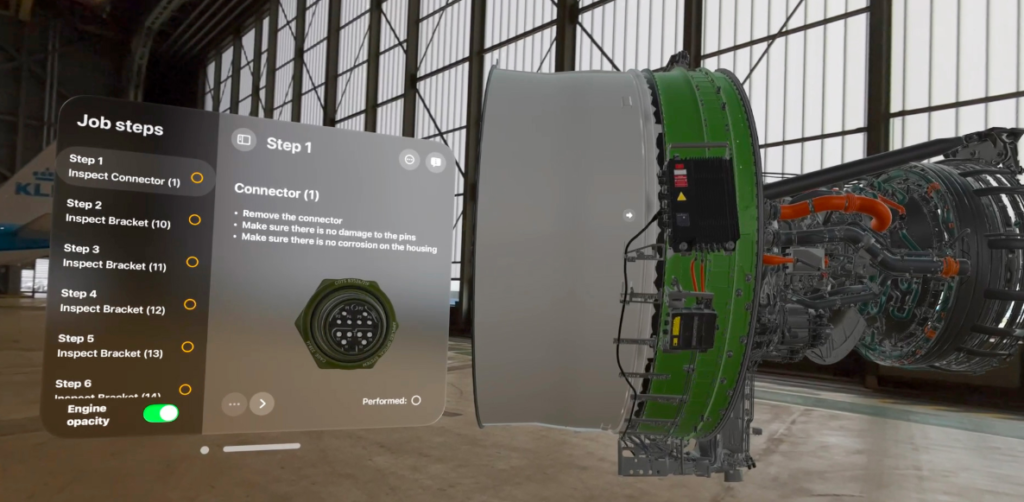
Apple’s mixed reality ecosystem introduces a new way to shop using spatial computing. With intuitive gestures and seamless Apple Pay integration, users can browse and purchase products that closely mirror real-world interactions. This makes the experience feel more familiar and immersive for shoppers.
3. Alibaba’s “Wonder Avenue”

Alibaba is blending online and offline retail through VR-powered experiences. Its “Wonder Avenue” concept includes virtual stores, avatar-based interactions, and AI-driven personalization. The brand is also experimenting with virtual runway shows to showcase products in a more dynamic and engaging format.
4. IKEA and Virtual Home Planning
IKEA uses VR to help customers visualize furniture in realistic settings. Through its virtual planning tools, users can walk through rooms, rearrange items, and understand how products fit into their space.
This reduces uncertainty and helps customers make more confident purchase decisions, especially for high-value items.
7 Steps to Implement Virtual Reality in Ecommerce
As ecommerce continues to evolve, brands are looking for ways to create richer, more engaging shopping experiences that go beyond static images and standard product pages. Virtual Reality (VR) offers a powerful way to bridge the gap between physical and digital retail by allowing customers to explore products in immersive environments.
From virtual showrooms to interactive product visualization, VR can significantly enhance how users discover and evaluate products.
However, successful implementation requires a structured approach that aligns business goals, technology, and user experience.
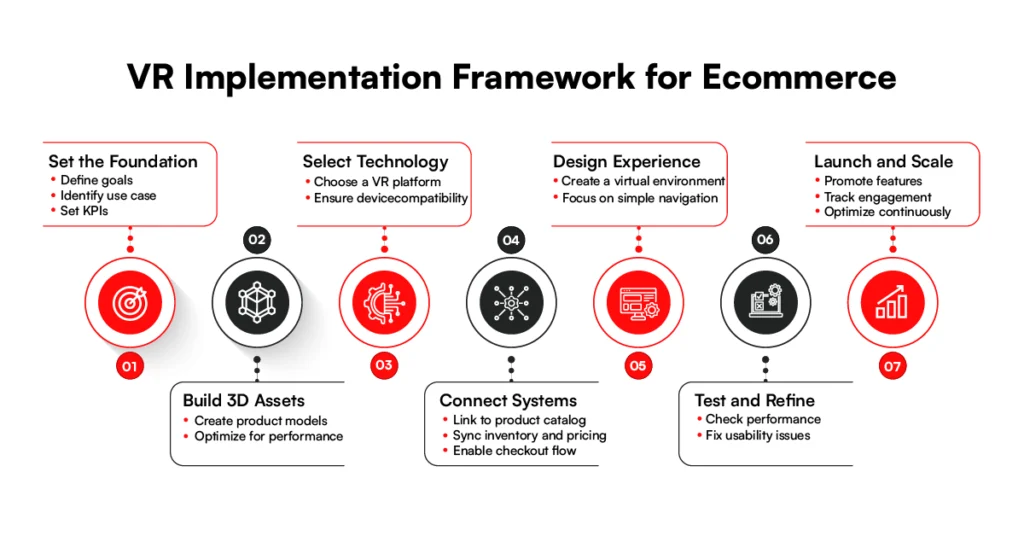
1. Define Objectives and Strategy
The first step is to define clearly what you want to achieve with VR. This could range from creating a virtual storefront to enabling immersive product visualization or offering 360-degree product views.
Each use case serves a different purpose, so it is important to align your VR initiative with specific business goals.
Establish clear KPIs such as engagement rates, session duration, conversion rates, or reduction in product returns. Starting with a focused use case helps minimize complexity and ensures measurable outcomes.
2. Create High-Quality 3D Product Assets
A compelling VR experience depends heavily on the quality of your 3D assets. Products need to be recreated as detailed and accurate 3D models, either through 3D scanning technologies or by working with professional designers.
At the same time, these assets must be optimized for performance to ensure quick load times and smooth interactions across devices. Striking the right balance between visual fidelity and performance is essential to avoid slow experiences that can drive users away.
3. Choose the Right Platform and Tools
Selecting the right technology stack is a crucial step in building a successful VR experience. Businesses can opt for web-based VR, which lets users access immersive content directly in a browser without additional downloads.
This approach makes the experience more accessible and scalable, as users can engage with it instantly across devices. On the other hand, app-based VR solutions offer a more advanced and immersive experience, often leveraging dedicated hardware and richer graphics capabilities.
Platforms such as Shopify offer built-in 3D and AR features that make it easier to get started, especially for brands looking for quicker implementation. In addition, third-party tools and VR development frameworks can be used to create more customized and interactive experiences.
The final choice should be guided by your audience’s device preferences. Also, your budget constraints and the level of immersion you want to achieve should be balanced to ensure accessibility, performance, and user experience.
4. Integrate with Your Ecommerce Ecosystem
For VR to deliver real business value, it must integrate seamlessly with your existing ecommerce systems. This includes connecting 3D product assets to your catalog and ensuring real-time synchronization of pricing, inventory, and product information.
Accurate and consistent data builds trust and prevents user confusion during the shopping journey.
Just as important is enabling a smooth transition from exploration to purchase. Users should be able to add products to their cart and complete checkout without friction.
When implemented effectively, VR becomes a natural extension of your store. It enhances engagement while maintaining a consistent and reliable user experience that supports conversions.
5. Build an Immersive Virtual Environment
Designing the virtual environment is where your VR experience comes to life. It can be a branded showroom, an interactive display, or a guided shopping journey. The space should reflect your brand and feel easy to explore.
Keep navigation simple and clear. Make product interactions realistic and smooth. Avoid complex movements that confuse users. Use layout, lighting, and placement to improve the overall feel.
A well-designed environment keeps users engaged. It encourages exploration and builds confidence. This helps users understand products better and make informed purchase decisions.
6. Test and Optimize the Experience
Before launching, it is important to rigorously test the VR experience across multiple devices and user scenarios. Identify and fix usability issues, performance bottlenecks, and technical glitches.
Pay close attention to load times, responsiveness, and ease of navigation. User feedback at this stage can provide valuable insights for refinement and help ensure a smooth and enjoyable experience.
7. Promote and Launch Strategically
Introducing VR features requires active promotion to drive awareness and adoption. Highlight the benefits through marketing campaigns, on-site messaging, and product pages. Features such as virtual try-ons or immersive product demos should be clearly communicated to users.
A strong launch strategy ensures that your investment in VR translates into meaningful user engagement and business impact.
Build Your VR Store Faster
Struggling with low engagement and high returns? We help you create immersive ecommerce experiences that drive conversions.
Get My VR SolutionThe Technology behind Ecommerce Virtual Reality
Virtual reality ecommerce is powered by a combination of advanced technologies that work together to create seamless and immersive shopping experiences. These technologies form the backbone of VR in ecommerce.
They enable personalized interactions and real-time responsiveness. As they evolve, virtual shopping becomes more realistic and interactive. This also makes it easier to scale and deliver richer experiences beyond traditional digital platforms.
Artificial Intelligence (AI) and Machine Learning
AI is used to create personalized virtual experiences. From avatar customization to real-time product recommendations, machine learning enhances the VR customer experience.
Haptic Feedback
Advances in tactile technology allow users to “feel” textures or vibrations when interacting with virtual objects. This development adds a physical dimension to digital shopping.
5G Connectivity
High-speed internet is essential for smooth VR experiences. With the rise of 5G, buffering delays and lag times will become less of a barrier to widespread VR adoption.
Computer Vision
Computer vision helps VR systems understand and respond to visual inputs in real time. It enables features like gesture recognition, body tracking, and virtual try-ons.
In ecommerce, it improves accuracy and realism, helping users interact naturally and make more confident purchase decisions.
Key Role of AI in VR for the Ecommerce Industry
Artificial Intelligence plays a critical role in making VR experiences more intelligent, responsive, and effective for ecommerce. It helps brands deliver personalized, interactive, and data-driven shopping journeys that go beyond static digital experiences.
Hyper-Personalization
AI analyzes user data such as browsing behavior, purchase history, and preferences in real time. It uses these insights to customize virtual showrooms, product placements, and promotions for each shopper, creating a more relevant, engaging and personalised shopping experience.
Intelligent Product Try-Ons and Visualization
AI powers computer vision to enable accurate virtual try-ons for clothing, accessories, and beauty products. It also supports realistic product visualization for items like furniture. This reduces uncertainty and helps customers make more confident purchase decisions.
Conversational and Virtual Support
AI-driven chatbots and virtual assistants guide users within VR environments. They answer product questions, offer recommendations, and help users navigate the virtual store, improving both convenience and engagement.
Dynamic Virtual Environments
AI helps create and manage virtual storefronts by updating layouts, product displays, and inventory in real time. It adjusts product placement based on demand and user behavior, keeping the experience fresh and relevant.
Enhanced Data Insights
AI tracks how users interact with VR products. It analyzes actions such as viewing time, interactions, and navigation patterns. These insights help businesses refine marketing strategies, improve product placement, and optimize the overall shopping experience.
Cost to Build and Implement the VR into Ecommerce Stores
The cost of building and implementing virtual reality in ecommerce varies widely depending on the level of complexity, features, and required customization. In 2026, businesses can expect to invest anywhere from $10,000 to over $500,000 for VR commerce solutions.
At the entry level, a basic 3D virtual showroom or product viewer can cost between $15,000 and $40,000, offering simple interactions and limited functionality.
On the other end of the spectrum, fully immersive, AI-powered VR experiences with advanced interactivity and custom integrations can exceed $250,000, especially for enterprise-scale implementations.
VR Implementation Cost Breakdown (2026 Estimates):
- Basic VR or 3D Viewer: $2,000 to $15,000+
Web-based solutions with limited interactivity, suitable for simple product visualization
- Virtual Showroom or Storefront: $80,000 to $200,000+
Interactive 360-degree environments designed for immersive product exploration
- High-End Enterprise VR: $200,000 to $500,000+
Advanced experiences with multi-user functionality, AI integration, and deep system customization
- 3D Product Modeling: $5,000 to $20,000 per product
High-quality, detailed models, depending on the complexity and realism required
The final cost depends on factors such as the number of products, level of interactivity, platform choice, and integration requirements. Businesses should start with a focused use case and scale gradually to optimize both investment and impact.
Get a Clear VR Cost Estimation
Confused about pricing and scope? We break down costs and help you invest wisely.
Book Your Custom QuoteHow RBMSoft Assists You in Developing Virtual Reality For Your Ecommerce?
Ecommerce virtual reality is steadily moving from experimentation to real-world adoption. As customer expectations shift toward more immersive and personalized experiences, businesses need to rethink how they present products and engage users online.
At RBMSoft, we specialize in delivering IT services for retail that help brands adopt and scale Virtual reality commerce effectively. Our approach combines strategy, design, and engineering to build immersive experiences.
From initial ideation to deployment and optimization, we ensure that VR becomes a practical and value-driven extension of your ecommerce ecosystem.
At RBMSoft, our capabilities in ecommerce virtual reality include:
- End-to-end VR strategy and consulting tailored to retail use cases
- 3D product modeling and asset optimization for high-performance experiences
- Development of virtual showrooms and immersive shopping environments
- Seamless integration with ecommerce platforms, inventory, and checkout systems
- Cross-platform VR solutions for web, mobile, and headset-based experiences
- AI-driven personalization and interactive customer journeys
- Performance optimization, testing, and continuous improvement
With the right foundation and execution, VR can unlock new levels of engagement, differentiation, and growth. Partnering with RBMSoft enables retailers to adopt immersive virtual commerce faster, smarter, and with measurable impact.
FAQs
1. What is the difference between Virtual Reality (VR) and Augmented Reality (AR)?
The main difference between VR and AR lies in how users experience digital content. VR creates a fully immersive environment that replaces the real world, while AR overlays digital elements onto the real-world environment. In ecommerce, VR enables complete virtual stores, whereas AR is often used for quick product previews in real surroundings.
2. What is the difference between traditional ecommerce and implementing VR in an online store?
The difference is in the level of interaction and immersion. Traditional ecommerce relies on images and videos, while VR enables virtual-reality online shopping, allowing users to explore products in 3D environments. This leads to better engagement, deeper product understanding, and a more experiential buying journey.
3. What is the difference between low-cost and high-end VR implementation in ecommerce?
The difference mainly depends on features, scale, and customization. Basic VR setups offer simple 3D viewers with limited interaction, while high-end solutions include immersive environments, AI-driven personalization, and real-time integrations. The more advanced the experience, the higher the investment and development effort.
4. What is the difference in time required to build simple vs complex VR ecommerce solutions?
The difference in timelines depends on scope and complexity. A basic VR feature can take a few weeks to a couple of months, while a fully immersive, enterprise-grade virtual reality ecommerce solution may take several months to develop, test, and deploy.
5. What is the difference between agentic commerce and traditional ecommerce?
The difference lies in automation and decision-making. Traditional ecommerce requires users to search and browse manually, while agentic commerce uses AI agents to act on their behalf, making decisions, providing recommendations, and even completing purchases autonomously.
6. What is the difference between using VR for online shopping vs in-person retail experiences?
The difference is in how the experience is delivered. For online use, VR enables virtual-reality shopping from anywhere, allowing users to explore products remotely. In physical stores, VR can enhance in-person shopping by offering virtual try-ons, guided experiences, or extended product catalogs beyond what is physically available.
7. What is the difference in business impact when using virtual reality in ecommerce?
The difference is seen in engagement and revenue outcomes. VR enhances user interaction, increases time spent on the site, and improves product understanding. This often leads to higher conversion rates, reduced returns, and stronger customer loyalty, ultimately driving better revenue performance.