




Quick Summary:
- Data analytics for ecommerce goes beyond basic reporting. It helps you understand customer behavior, identify gaps, and take actions that directly impact growth.
- Ecommerce analytics follows a continuous cycle from data collection to action. The real value comes when insights are used to improve decisions and experiences.
- Different types of analytics serve different purposes. Descriptive, diagnostic, predictive, and prescriptive analytics work together to enable deeper personalization.
- Big data and AI agents take analytics to the next level. They enable real-time decision-making, automation, and personalization at scale.
- Tracking the right KPIs across acquisition, engagement, conversion, revenue, and retention is essential to measure and improve performance.
- Successful implementation depends on strong data practices. Clear goals, clean data, the right tools, and continuous optimization are critical for long-term success.
You are driving traffic to your ecommerce store. Campaigns are running, users are visiting, and products are getting views. But conversions are not where you expect them to be.
Some customers drop off midway, others browse without buying, and marketing spend does not always translate into revenue. You look at reports, but they only tell you what happened, not why it happened or what to fix next.
This is a common challenge. Many ecommerce teams sit on large volumes of data but struggle to turn it into meaningful action. Without the right analytics approach, it becomes difficult to understand customer behavior, personalize experiences, or optimize performance across the journey.
This is where advanced data analytics makes the difference. It helps you move beyond basic reporting and start making smarter, data-driven decisions. From understanding how users interact with your store to predicting what they will do next, analytics becomes the foundation for personalization and growth.
In this blog, you will see how ecommerce analytics works, the different types of analytics, real-world use cases, challenges, costs, and how to implement it effectively.
What is Data Analytics for Ecommerce?
Data analytics for ecommerce refers to the process of collecting, analyzing, and interpreting data from your online store to understand customer behavior and drive better decisions.
It forms the foundation of ecommerce analytics, helping businesses move from raw data to meaningful, revenue-driving insights.
Many brands rely on basic reporting, but that only tells you what happened, such as traffic or sales numbers. Advanced analytics goes further. It explains why those outcomes occurred and what actions to take next.
Instead of just tracking cart abandonment, for example, it helps identify the cause and recommends ways to recover those lost conversions.
To make this possible, ecommerce businesses work with multiple data types. This includes:
- customer data like demographics and purchase history,
- behavioral data such as browsing patterns and clicks, and
- transactional data covering orders and returns.
It also includes product data on performance and pricing, along with channel data showing where traffic is coming from. Together, these data points create a complete view of the customer journey.
Upgrade Your Analytics Strategy
Basic reporting is not enough anymore. Move to advanced analytics that actually improves performance.
Talk to an Expert
Ecommerce Analytics Lifecycle For Customer: From Data to Decisions
Ecommerce analytics real value lies in how you turn that data into decisions that drive growth. High-performing ecommerce teams follow a clear lifecycle that connects raw data to real business actions.
- Awareness
Track demographics, reach, impressions, and on-site behavior to understand who your audience is and how they interact with your brand. These insights help you refine messaging, target the right customers, and build stronger brand visibility across channels.
- Acquisition
Analyze where visitors come from and measure metrics like cost per lead (CPL) and cost per customer (CPC). This helps optimize ad spend, improve campaign performance, and focus budgets on channels that deliver the best results.
- Conversion
Understand which traffic sources generate the highest sales and where users drop off before purchase. Ecommerce analytics helps improve product pages, checkout flows, and campaigns to increase conversion rates and overall revenue.
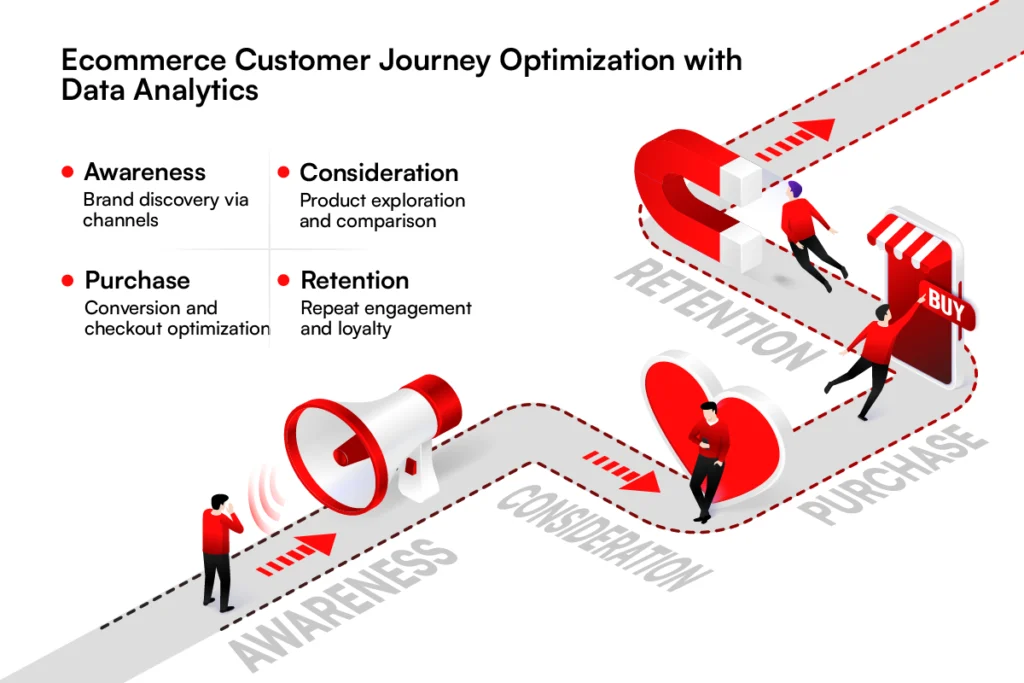
- Retention
Monitor repeat purchases, average order value, and cart abandonment to uncover opportunities for stronger customer loyalty. Retention strategies often deliver faster returns by increasing lifetime value from your existing customer base.
- Advocacy
Use loyalty, referral, and engagement data to identify satisfied customers who are likely to recommend your brand. These insights help you encourage referrals, boost word-of-mouth marketing, and strengthen long-term customer relationships.
4 Types of Ecommerce Data Analytics
To build strong personalization, ecommerce analytics works in layers. Each type answers a different question and adds depth to your decision-making. When used together, they help you move from simply tracking performance to actively shaping customer experiences.
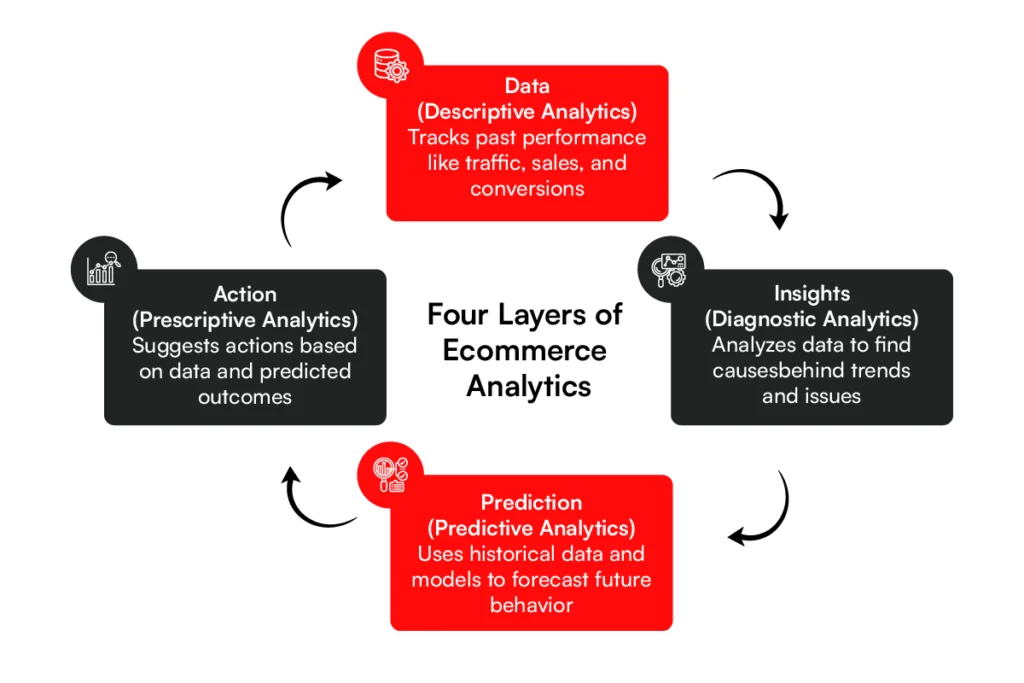
1. Descriptive Analytics: What Happened
Descriptive analytics is where most ecommerce teams begin. It focuses on historical data to show what has already happened across your store. This includes metrics like website traffic, conversion rates, top-selling products, and revenue trends.
For example, you might notice that a particular category performed well during a seasonal sale or that a specific campaign drove a spike in traffic. These insights help you understand patterns and establish performance benchmarks.
According to industry reports, a large share of ecommerce businesses rely heavily on descriptive analytics through dashboards and reporting tools.
This data helps you identify what customers are already responding to. You can highlight popular products, promote trending categories, and align your merchandising with proven demand.
While it does not explain the reasons behind outcomes, it gives you a clear and reliable starting point for deeper analysis.
2. Diagnostic Analytics: Why It Happened
Descriptive data tells you what is going on, but it does not explain the cause. That is where diagnostic analytics comes in. It focuses on uncovering the reasons behind trends by analyzing relationships between different data points.
Let’s say you notice a sudden drop in conversions. Diagnostic analysis can help you break this down further. You might discover that mobile users are dropping off at checkout, or that a pricing change affected purchase behavior.
By segmenting users and comparing patterns, you begin to identify the real drivers behind performance shifts.
This level of insight is critical for personalization because it enables you to address specific problems rather than make broad assumptions. For example, if a certain customer segment consistently abandons carts, you can tailor offers, simplify checkout, or adjust messaging for that group.
The biggest advantage here is clarity. Instead of reacting blindly, you make targeted improvements that directly impact the user experience and conversion rates.
3. Predictive Analytics: What Will Happen
Predictive analytics shifts the focus from the past and present to the future. It uses historical data along with machine learning models to forecast what customers are likely to do next.
A common example is product recommendation engines.
By analyzing browsing history, purchase behavior, and similar user patterns, ecommerce platforms can predict which products a customer is most likely to buy. This is a major revenue driver. Many large ecommerce platforms attribute a significant portion of their sales to predictive recommendation systems.
Beyond recommendations, predictive analytics is also used for demand forecasting, customer lifetime value estimation, and churn prediction. For instance, if the system identifies that a customer is likely to stop purchasing, you can intervene with retention strategies before it happens.
This is where things become proactive. Instead of waiting for users to act, you anticipate their needs and deliver relevant experiences in advance. This leads to higher engagement, better conversions, and more efficient marketing efforts.
4. Prescriptive Analytics: What to Do Next
Prescriptive analytics is the most advanced stage and also the most impactful. It predicts outcomes and suggests the best actions to achieve desired results. It combines data, algorithms, and business rules to guide real-time decision-making.
For example, instead of just predicting that demand for a product will increase, prescriptive analytics can recommend how much inventory to stock, what pricing strategy to apply, and which customer segments to target. It evaluates multiple scenarios and identifies the most effective approach.
In ecommerce, this plays a key role in advanced personalization. It powers dynamic pricing, real-time product recommendations, and automated marketing actions. For instance, a returning user might see a completely different homepage, offers, and pricing based on their behavior and predicted intent.
The real advantage here is scalability. You are no longer making decisions manually. The system continuously learns, adapts, and optimizes every interaction. This is what enables truly personalized ecommerce experiences at scale and gives businesses a strong competitive edge.
Big Data Analytics in Ecommerce
While data analytics for ecommerce works well with structured data, big data analytics in ecommerce goes further by processing large volumes of structured and unstructured data, such as reviews, clickstreams, and social signals, in real time. This is what enables personalization at scale.
As ecommerce grows, so does data. The global big data in ecommerce market is projected to grow from USD 5.2 billion in 2024 to USD 17.2 billion by 2034, underscoring its critical importance. Big data addresses the 5 Vs: volume, velocity, variety, veracity, and value, enabling efficient analysis of fast-moving, complex datasets.
Top 6 Core Ecommerce Big Data Analytics Techniques
- Data Mining
Data mining uncovers hidden patterns in large datasets. In ecommerce, it often identifies products that are bought together. This powers features like “frequently bought together.” It helps increase average order value.
- Clustering
Clustering groups of customers based on similar behavior and preferences. It does not rely on predefined labels. This helps create clear customer segments. Businesses can then target each group with personalized campaigns and recommendations.
- Predictive Analytics
Predictive analytics uses past data to forecast future behavior. It helps anticipate demand and identify customers at risk of churn. This allows businesses to take action early. It improves retention and sales outcomes.
- Sentiment Analysis
Sentiment analysis studies customer reviews and feedback. It helps understand how customers feel about products or services. Brands can use this insight to adjust messaging. It also improves product recommendations and overall experience.
- Collaborative Filtering
Collaborative filtering recommends products based on similar user behavior. It looks at patterns across users. If similar users like certain products, those get recommended. This powers the “recommended for you” sections.
- Regression and Neural Networks
Regression identifies relationships between variables like price and demand. Neural networks analyze complex data patterns. Together, they support use cases like dynamic pricing and advanced recommendation systems.
How does Data Analytics Improve Decision-Making?
Making the right decisions becomes easier when enterprises use data with clear intent. Instead of relying on assumptions, businesses can understand what customers want, how they behave, and where opportunities exist.
Data analytics turns everyday interactions into useful insights (customer acquisition, customer retention, personalization, and user experience) that guide smarter strategies, improve performance, and reduce wasted effort.
- Customer Acquisition Analytics
This shows which channels, campaigns, and audience segments bring the most valuable customers. Instead of blindly spreading budgets, businesses can invest in sources that generate higher conversions and stronger lifetime value.
It also helps improve targeting, messaging, and campaign timing based on actual performance data.
It also highlights cost per acquisition, return on ad spend, and lead quality across channels. This gives decision-makers a clearer view of where growth is coming from. With the right insights, businesses can scale winning campaigns faster and reduce wasted marketing spend.
- Personalization Analytics
This examines customer behavior, preferences, and purchase history to deliver more relevant experiences. It helps businesses recommend the right products, show targeted offers, and customize content for different user segments.
This increases engagement, improves conversion rates, and raises average order value through smarter customer interactions. It also reveals which recommendations, offers, and content perform best for each audience group.
- Website Experience Analytics
This reveals how visitors interact with your store. It shows where users click, where they drop off, and what creates friction during browsing or checkout. Businesses can use this data to improve navigation, speed, product pages, and checkout flow. It leads to better user experience and higher conversions.
- Customer Retention Analytics
This helps businesses understand why customers return or stop buying. It tracks repeat purchases, churn signals, engagement levels, and buying frequency. With these insights, teams can launch loyalty programs, re-engagement campaigns, and personalized offers. This improves retention while reducing the cost of acquiring new customers.
Use Cases and Real-Life Examples of Ecommerce Analytics
Ecommerce analytics becomes truly valuable when you apply it to real scenarios. These use cases show how data moves from insight to action, delivering measurable business impact.
- Personalized Product Recommendations
Analytics studies browsing behavior, purchase history, and similar user patterns to recommend relevant products in real time. This improves discovery, increases engagement, and drives higher average order value by showing customers what they are most likely to buy next.

Example: Amazon customers often bought a single product and left, limiting cross-sell opportunities. To solve this, Amazon built a recommendation engine that analyzes real-time behavior and historical purchase patterns.
When a customer adds a product to the cart, the system instantly shows “frequently bought together” items based on what similar users purchased. The approach relies on collaborative filtering and real-time triggers.
The result is highly contextual recommendations that feel natural to the shopper. This has significantly increased cross-selling, boosted average order value, and improved overall engagement.
- Dynamic Pricing
This uses real-time data, such as demand, location, and user behavior, to adjust prices instantly. It helps balance demand and supply while maximizing revenue and maintaining service availability.
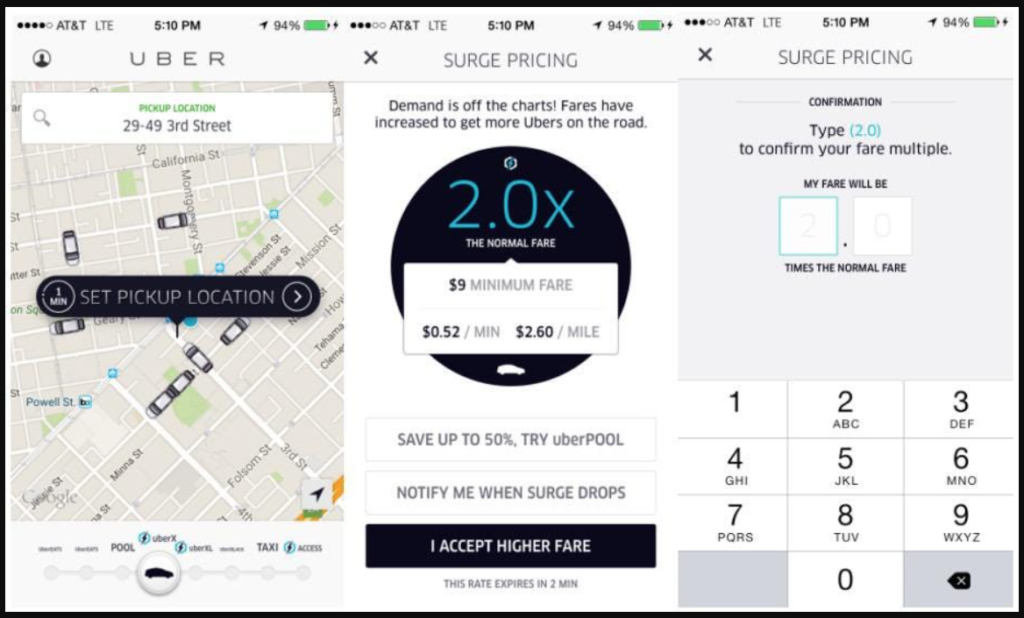
Example: Uber struggled with demand spikes during peak hours, where rider demand exceeded driver availability. This led to long wait times and a poor user experience. To address this, Uber introduced a dynamic pricing model powered by real-time analytics.
The system continuously monitors factors like rider demand, driver supply, traffic conditions, and location. When demand increases, prices rise automatically to encourage more drivers to move to that area. Once supply stabilizes, prices adjust back.
This approach balances the ecosystem. The result is improved ride availability, reduced wait times, and optimized revenue for both drivers and the platform.
- Customer Segmentation and Targeting
Analytics groups customers based on behavior, preferences, and purchase patterns. This allows businesses to deliver targeted recommendations and campaigns that match user interests and improve engagement.
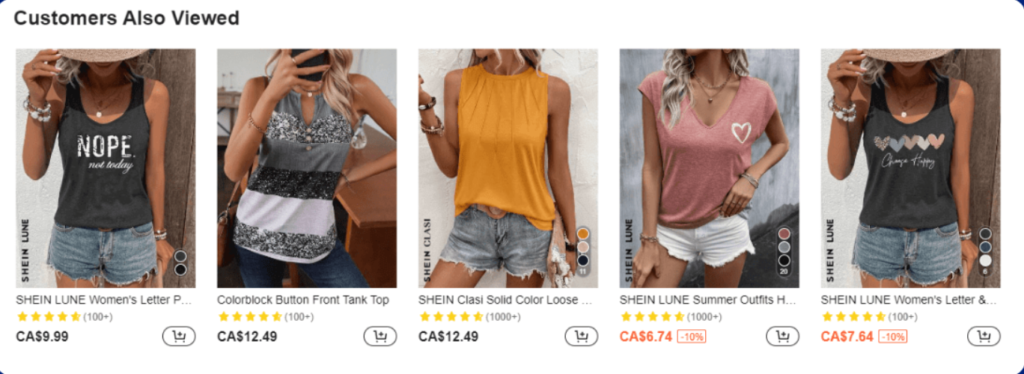
Example: Shein needed to keep users engaged despite offering a massive product catalog. Without personalization, users could easily feel overwhelmed and leave. To address this, Shein implemented customer segmentation based on shopping behavior and style preferences.
It grouped users into segments and used this data to power features like “Customers Also Viewed.” These recommendations are based on what similar users have interacted with or purchased.
The approach ensures that every user sees products that align with their tastes. The result is longer browsing sessions, increased engagement, and higher conversion rates as users continue exploring relevant options.
- Inventory Optimization
Analytics helps predict demand and manage inventory efficiently. It ensures product availability while reducing waste and operational costs.
Example: BigBasket faced challenges with managing perishable goods and maintaining high availability across categories. Overstocking led to wastage, while understocking caused missed sales. To address this, BigBasket implemented AI-driven demand forecasting alongside an inventory-led model.
It analyzed historical sales, seasonal trends, and real-time demand signals to optimize stock levels. It also used dark stores and specialized supply chain processes to improve fulfillment.
The result was a significant reduction in wastage by around 35 percent and improved efficiency in order fulfillment. This ensured better product availability and a smoother customer experience.
- Fraud Detection
Analytics detects unusual transaction patterns to prevent fraud in real time. It protects both the business and customers from financial risks.
Example: Consider a regular customer who usually shops from Pune using the same device and makes moderate purchases. One day, a high-value order is placed from a different country using a new device and a new payment method.
The system instantly flags this as suspicious based on deviation from normal behavior. It temporarily blocks the transaction and triggers additional verification, like OTP or identity confirmation. If the activity is confirmed as fraud, the transaction is canceled.
This approach prevents financial loss and builds trust by ensuring secure transactions.
Insights Drive 5-6% Growth
Data-driven companies see measurable gains in productivity and revenue. Your data should be doing the same.
Drive My GrowthRole of AI Agents in Ecommerce Analytics
AI agents are changing how ecommerce analytics works. Instead of just analyzing data, they act on it. These agents are autonomous systems that can interpret data, make decisions, and execute actions without constant human input.
In simple terms, AI agents take your analytics from insight to execution. They enhance ecommerce analytics in three key ways.
First, they automate data interpretation. Instead of manually digging through dashboards, AI agents analyze large datasets instantly. They identify patterns, detect anomalies, and surface insights that matter. This saves time and reduces dependency on manual analysis.
Second, they enable real-time decision-making. As soon as a customer interacts with your platform, AI agents process that data and respond instantly. This could mean updating recommendations, triggering offers, or adjusting pricing while the user is still browsing.
Third, they support continuous learning. AI agents learn from every interaction. As customer behavior changes, the system adapts. This ensures that personalization stays relevant and improves over time without constant reconfiguration.
AI agents for ecommerce are already transforming how businesses operate and serve customers.
- Dynamic pricing agents adjust product prices based on demand, competition, and user behavior. This helps maximize revenue and stay competitive.
- Personalization engines analyze browsing and purchase patterns to deliver tailored product recommendations, content, and offers in real time.
- Customer support and chat agents handle queries, guide users through their journey, and even assist in purchase decisions. They improve response time and enhance the overall customer experience.
Together, AI agents turn ecommerce analytics into a living system. One that understands data and acts on it instantly, continuously improving with every interaction. To make the most of AI-driven decisions, you also need a clear way to measure their impact.
This is where metrics become critical. Without tracking performance, even the most advanced analytics and AI systems lack direction.
5 Key Metrics and KPIs for Ecommerce Data Analytics
Tracking the right metrics is what turns ecommerce analytics into real business impact. Each KPI tells you something specific about your customers, and more importantly, shows where personalization can improve performance.
- Acquisition metrics help you understand how customers find you. This includes customer acquisition costs and traffic sources such as search, social, and ads. If you know which channels bring high-value users, you can personalize campaigns and landing pages for those audiences. This improves targeting and reduces wasted spend.
- Engagement metrics show how users interact with your site. Bounce rate and session duration are key indicators here. A high bounce rate may signal irrelevant content or poor targeting. Personalizing homepage content, product listings, or recommendations can keep users engaged and encourage deeper browsing.
- Conversion metrics show how effectively you convert visitors into customers. Conversion rate and cart abandonment are critical. If users drop off before purchase, personalization can help. For example, showing tailored offers, simplifying checkout, or reminding users about abandoned carts can improve conversions.
- Revenue metrics focus on the value each customer brings. Metrics like average order value, customer lifetime value, and revenue per visitor give a clear picture of profitability. Personalization plays a big role here by recommending relevant products, upselling, and cross-selling to increase order size and long-term value.
- Retention metrics measure how well you keep customers coming back. Repeat purchase rate and churn rate are key indicators. Personalized email campaigns, loyalty programs, and product recommendations based on past behavior can significantly improve retention.
When you connect these metrics, you move beyond isolated insights and begin to understand the full customer journey. You can see where users enter, how they engage, what drives conversions, and what keeps them coming back.
6 Benefits of Data Analytics for Ecommerce
Data analytics directly shape how your ecommerce business grows, scales, and competes. When used effectively, it improves both customer experience and business performance.
1. Improved Personalization and Customer Experience
Analytics helps you understand what your customers want, how they browse, and what influences their decisions. Instead of showing the same experience to everyone, you can tailor product recommendations, homepage content, and offers based on individual behavior.
This makes the shopping experience feel relevant and intuitive. When customers find what they need faster, satisfaction increases and so does the likelihood of purchase.
2. Higher Conversion Rates
A large number of users drop off before completing a purchase. Analytics helps identify exactly where and why this happens. It could be a confusing checkout process, irrelevant product suggestions, or lack of trust signals. Once these gaps are clear, you can fix them with targeted improvements. Personalized offers, better product discovery, and smoother checkout experiences directly contribute to higher conversions.
3. Better Inventory and Demand Forecasting
Managing inventory is one of the biggest challenges in ecommerce. Analytics uses historical data and trends to predict demand more accurately. This ensures that high-demand products stay in stock while reducing excess inventory for slow-moving items. Better forecasting leads to fewer missed sales opportunities and lower operational costs.
4. Optimized Marketing Spend
Marketing budgets can easily get wasted without clear insights. Analytics shows which channels bring quality traffic and which campaigns actually convert. This allows you to invest more in what works and cut down on what does not. Over time, this improves return on investment and makes your marketing efforts more efficient and targeted.
5. Data-driven Decision-making
Decisions based on assumptions often lead to inconsistent results. Analytics replaces guesswork with clear, measurable insights. Whether you are adjusting pricing, launching a new product, or running a promotion, data helps you make informed choices. This leads to more predictable outcomes and reduces risk.
6. Competitive Advantage
Ecommerce is highly competitive, and speed matters. Businesses that use data effectively can respond quickly to changing customer behavior and market trends. They can test, learn, and adapt faster than others. This ability to continuously improve gives them a strong advantage in attracting and retaining customers.
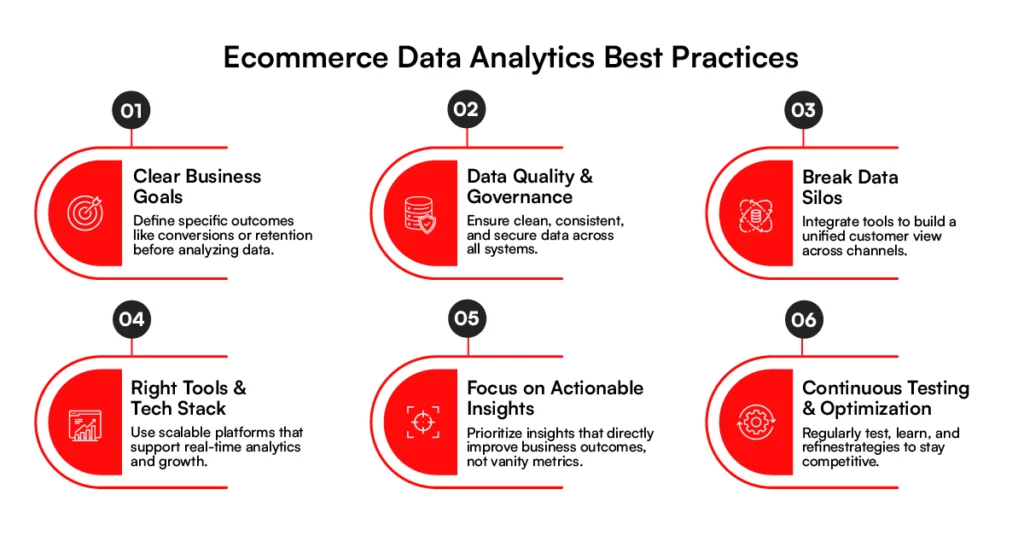
Top 6 Ecommerce Data Analytics Best Practices
Getting real value from ecommerce analytics is about using the right data in the right way. These best practices help ensure your analytics efforts actually drive growth.
1. Start with Clear Business Goals
Everything begins with clarity. Analytics should answer specific business questions, not just generate dashboards. For example, the goal could be improving conversion rates, reducing cart abandonment, or increasing customer lifetime value.
When goals are clearly defined, it becomes easier to decide what data to track and which metrics matter. It also keeps teams aligned and prevents unnecessary analysis that does not contribute to outcomes.
2. Ensure Data Quality and Governance
Poor data leads to poor decisions. If your data is incomplete, duplicated, or inconsistent, the insights will be misleading. It is important to maintain clean and structured data across all systems.
This includes setting standards for data collection, validation, and storage. Governance also plays a key role. It ensures data is secure, compliant with regulations, and used responsibly across teams.
3. Break Down Data Silos
In many ecommerce businesses, data is scattered across marketing tools, CRM systems, analytics platforms, and customer support software. When these systems operate in isolation, you miss the full picture of the customer. Integrating these data sources creates a unified view.
This helps you understand the entire journey, from acquisition to retention, and enables more accurate personalization and decision-making.
4. Use the Right Tools and Tech Stack
The effectiveness of your analytics depends heavily on your technology. The right tools help collect, process, analyze, and visualize data efficiently. This may include analytics platforms, data warehouses, customer data platforms, and BI tools.
As your business grows, your tech stack should support scalability and real-time insights. Choosing tools that integrate well with each other is equally important.
5. Focus on Actionable Insights, not Vanity Metrics
It is easy to get distracted by numbers that look impressive but do not impact business outcomes. Metrics like page views or social likes may not directly contribute to revenue. Instead, focus on insights that lead to action.
For example, identifying why users drop off at checkout or which campaigns drive high-value customers. Actionable insights help you make meaningful improvements.
6. Continuous Testing and Optimization
Ecommerce is dynamic. Customer behavior, market trends, and competition keep changing. What works today may not work tomorrow. Continuous testing helps you stay ahead.
Techniques like A/B testing allow you to compare different strategies and identify which performs better. Optimization should be an ongoing process. This ensures your analytics stays relevant and continues to deliver results.
As an ecommerce software development company, RBMSoft helps businesses connect scattered data sources and build analytics systems around the metrics that matter. We integrate ecommerce, CRM, marketing, and operational data so teams can turn reporting into business decisions.
–
Top 6 Challenges in Ecommerce Data Analytics and How to Overcome Them
Ecommerce analytics can deliver strong results, but the path is not always smooth. Most businesses run into similar issues. The key is to recognize them early and fix them before they slow you down.
1. Data Silos and Integration Issues
Data rarely sits in one place. Marketing tools, CRM systems, analytics platforms, and support software all capture different pieces of the customer journey. When these systems are disconnected, insights become fragmented, and personalization suffers.
The way forward is integration. Bringing data into a centralized system, such as a data warehouse or customer data platform, helps create a unified customer view. Once data flows across systems, analysis becomes more accurate, and decisions become more reliable.
2. Poor Data Quality
Bad data quietly breaks everything. Missing fields, duplicate entries, and inconsistent formats lead to misleading insights. Many teams do not realize this until decisions start failing.
Fixing this requires discipline. Set validation rules at the point of data collection. Audit data regularly. Use automated tools to clean and standardize datasets. Even small improvements in data quality can significantly improve the accuracy of your analytics.
3. Privacy and Compliance Concerns
Handling customer data requires careful responsibility. Regulations are becoming stricter, and customers expect full transparency on how their data is collected and used. Even a small lapse can lead to legal issues and loss of trust, which is hard to rebuild.
To manage this, businesses need clear consent mechanisms and transparent communication. Customers should know what data is being collected and why. Secure storage and strong access controls are equally important to prevent breaches.
It also helps define clear data-usage policies across teams. When privacy is built into your analytics strategy, it not only ensures compliance but also strengthens customer trust and long-term relationships.
4. Scaling Analytics Infrastructure
What works for a small dataset often breaks as your business grows. In the early stages, basic tools and simple dashboards are enough. But as traffic increases, data starts coming in from multiple sources, such as web, mobile, ads, and third-party platforms.
This creates higher load, slower processing, and delays in insights. Queries take longer to run, dashboards lag, and real-time decision-making becomes difficult.
To handle this, scalability needs to be built into your system from the start. Cloud-based platforms allow you to store and process large volumes of data without performance issues.
Technologies like distributed computing and data pipelines help manage data flow efficiently. Real-time processing tools ensure that insights are available instantly, not hours later.
It is also important to design systems that can scale automatically as demand increases. This avoids frequent rebuilds. When infrastructure scales smoothly, analytics stays fast, reliable, and ready to support business growth without bottlenecks.
5. Talent and Skill Gaps
Not every ecommerce business has access to experienced data scientists, engineers, or analysts. This often slows analytics adoption and limits the effective use of data. Teams may struggle to interpret insights, build models, or even set up the right infrastructure.
To overcome this, start by upskilling existing teams through training and hands-on learning. Encourage cross-functional understanding so business and technical teams work better together.
Use modern analytics tools with intuitive interfaces and automation to reduce the need for deep technical expertise. When needed, partner with external experts or agencies to accelerate implementation. This balanced approach helps build capability without heavy long-term hiring pressure.
6. High Implementation Complexity
Building an analytics setup can feel overwhelming. Multiple tools, integrations, and workflows need to work together. Without a clear plan, teams often get stuck in long implementation cycles.
Instead of trying to do everything at once, start with a focused use case. Solve a specific problem, such as cart abandonment or campaign performance. Once that works, expand gradually. This step-by-step approach reduces complexity and delivers faster results.
Cost to Implement Data Analytics in Ecommerce
The cost of implementing data analytics in ecommerce varies by business size, complexity, and goals. For small businesses, the initial setup typically ranges from $1,000 to $20,000, while mid-sized to large enterprises may invest from $10,000 to over $300,000.
Monthly costs also vary widely, ranging from $100 for basic dashboards to $25,000 or more for advanced, AI-driven analytics systems.
These costs are not just technical expenses. They directly support improvements in customer experience, marketing performance, and inventory planning, which drive long-term growth.
| Business Size | Initial Setup Cost | Monthly Cost Range | What It Covers |
| Small Businesses | $1,000 – $20,000 | $100 – $1,000 | Basic dashboards, standard analytics tools |
| Medium Businesses | $10,000 – $100,000 | $1,000 – $5,000 | Custom reporting, integrations, deeper insights |
| Large Enterprises | $20,000 – $300,000+ | $5,000 – $25,000+ | AI/ML models, real-time analytics, and advanced infrastructure |
Key Components Influencing Costs
- Data infrastructure and setup:
This includes building data pipelines, integrating multiple data sources, and configuring storage systems. Even a basic setup can range from $5,000 to $15,000, depending on the level of complexity.
- Tools and software:
Some tools offer free tiers, but advanced platforms come at a premium. For example, enterprise-level analytics tools can cost significantly more on a monthly basis, especially when real-time processing and large-scale data handling are involved.
- Talent and expertise:
Hiring skilled professionals, such as data analysts and engineers, or engaging external agencies, increases costs. Rates typically range from $50 to $200 per hour, depending on expertise and scope.
- Consulting and implementation:
Many businesses invest in consulting to design their data strategy and architecture. This ensures the setup aligns with long-term goals and avoids costly rework later.
Stop the Leak Before It Costs You More
Every day without data analytics is another day of guessing where your customers are dropping off. Get a clear picture of what it’ll take to fix it.
Book Your Free QuoteConclusion
Advanced data analytics is no longer optional in ecommerce. It is the foundation for delivering personalized experiences, improving conversions, and making smarter business decisions.
From understanding customer behavior to optimizing every stage of the journey, analytics helps you stay relevant in a highly competitive market.
This is where RBMSoft comes in. With deep expertise in Ecommerce IT services, RBMSoft helps businesses turn raw data into actionable insights and scalable personalization strategies.
Whether you are just starting or looking to advance your analytics capabilities, the right partner makes all the difference.
How RBMSoft can help:
- Build and implement end-to-end ecommerce analytics frameworks aligned with your business goals
- Integrate multiple data sources to create a unified customer view
- Set up a scalable data infrastructure for real-time analytics and personalization
- Develop AI-driven recommendation engines and dynamic pricing models
- Enable advanced customer segmentation and journey orchestration
- Optimize marketing performance with data-backed insights
- Ensure data quality, governance, and compliance across systems
- Support continuous testing, optimization, and performance tracking
Along with strong analytics capabilities, RBMSoft also offers Ecommerce solutions development, helping you build platforms that are data-ready from day one.
FAQ’s
1. What are the best tools for ecommerce analytics?
The best tools depend on your business size and goals. Commonly used options include Google Analytics for traffic insights, BI tools like Power BI or Tableau for visualization, and customer data platforms for unified views.
Advanced setups may include data warehouses and AI-driven tools for predictive insights. The right approach is to combine tools that support data collection, processing, and analysis.
Many businesses also rely on an ecommerce data analytics service to select and implement the right stack efficiently.
2. How can RBMSoft improve data analytics for ecommerce enterprises?
RBMSoft helps ecommerce businesses move from fragmented data to actionable insights. It builds integrated systems that connect multiple data sources and create a unified customer view.
From setting up scalable infrastructure to enabling real-time analytics and AI-driven insights, the focus is on measurable outcomes.
With tailored e-commerce data analytics solutions, RBMSoft ensures better decision-making, improved performance, and long-term scalability aligned with business goals.
3. How does ecommerce data analytics improve customer retention and journey?
Ecommerce data analytics helps you understand how customers interact across every stage of the journey. By analyzing behavior, preferences, and purchase patterns, you can identify drop-off points and engagement gaps. This allows you to personalize experiences, recommend relevant products, and improve communication.
As a result, customers feel more connected to your brand, which increases repeat purchases and loyalty. Strong ecommerce and data analytics strategies ensure every interaction adds value and improves retention.
4. What is the importance of real-time data analytics in ecommerce?
Real-time data analytics allows businesses to respond instantly to customer actions. Instead of waiting for reports, you can adjust recommendations, pricing, or offers while the user is still browsing. This improves engagement and increases the chances of conversion.
It also helps detect issues quickly, such as drop-offs or performance gaps. In a fast-moving ecommerce environment, real-time insights ensure you stay relevant and competitive.
5. How can AI and ML improve ecommerce analytics for better forecasting and decision-making?
AI and machine learning enhance ecommerce analytics by identifying patterns that are difficult to detect manually. They help predict customer behavior, forecast demand, and recommend next-best actions.
For example, ML models can estimate which users are likely to churn or what products will be in demand. This allows businesses to act proactively rather than reactively. Over time, these systems learn and improve, making decision-making faster, smarter, and more accurate.
6. What is the difference between real-time data analytics and traditional analytics in ecommerce?
Traditional analytics works on historical data and provides insights after events have already occurred. It helps understand trends but does not support immediate action. Real-time analytics, on the other hand, processes data as it is generated.
This allows businesses to respond instantly to user behavior. The key difference lies in speed and impact. Real-time analytics enables immediate decisions, while traditional analytics focuses on retrospective analysis.
7. How much time does it take to implement effective ecommerce data analytics?
The timeline depends on the complexity of your business and existing systems. A basic setup with standard tools can take a few weeks. More advanced implementations involving data integration, custom dashboards, and predictive models may take a few months.
Enterprise-level solutions with real-time analytics and AI capabilities can take longer. A phased approach is often the most effective, starting with high-impact use cases and scaling gradually over time.