- Retail AI
- Services
Looking for a more specific outcome? We’ll build a solution to get you there.
- Industries
Looking for a more specific outcome? We’ll build a solution to get you there.
- About
- Case Studies
- Resources
- Arvyn
Looking for a more specific outcome? We’ll build a solution to get you there.
Looking for a more specific outcome? We’ll build a solution to get you there.
As a headless commerce development company, we decouple your frontend experience layer from backend commerce logic. This enables your teams to ship at speed, scale flexibly, and control growth across every channel without replatforming or rebuilding your stack.
RBMSoft has spent a decade building, migrating, and scaling commerce systems for enterprise retailers. All headless commerce services below are delivered by engineers who have run these implementations under the pressure of peak trading seasons, multi-market rollouts, and zero-downtime migration requirements on production systems handling hundreds of thousands of monthly orders.
We run a full audit of your existing commerce stack, mapping frontend dependencies, backend system integrations, content delivery requirements, and performance constraints. Whether your operation requires MACH architecture, progressive decoupling from an existing monolith, or a greenfield composable build, our custom headless commerce development services ensure the strategy your team signs off on becomes the architecture we build.
Our headless commerce development services deliver custom frontend builds and scalable headless commerce website development using Next.js, React, and Vue.js, connected to your commerce backend through a clean API layer. As a headless e-commerce development agency, we build storefront performance, personalization rendering, and agile content delivery directly into your headless commerce architecture from day one.
As part of our headless commerce solutions development, we implement composable commerce using Commercetools, Contentful, Algolia, and Stripe, selecting and integrating best-of-class components for commerce logic, content management, search, and payment processing, tailored to your specific operational complexity.
As a headless e-commerce development company, we specialize in the strategic replatforming of Magento, Oracle ATG, SAP Commerce, or Salesforce Commerce Cloud to a headless architecture. Our experts run new headless commerce solutions in parallel with your existing platform, migrating channel by channel with zero downtime. We empower enterprise retailers to move to infrastructure that their teams control, rather than legacy platforms that constrain growth.
We build API orchestration layers as part of our headless commerce consulting services and validate every integration against your actual backend systems. The same integration approach has connected fulfillment infrastructure across retail operations processing 200,000 to 350,000 monthly orders, ensuring the clean data foundation that makes personalization, inventory accuracy, and AI-driven recommendations reliable enough to act on.
We engineer a decoupled search layer connected to a real-time catalogue that becomes a growth engine. We implement and customize Algolia, Lucidworks Fusion, Coveo, and OpenSearch within enterprise headless commerce environments, embedding AI-powered relevance, personalization, and real-time optimization directly into customer journeys.
As a long-term headless ecommerce agency, we manage headless architectures as evolving systems, preempting structural complexities, such as frontend regressions or API conflicts, that standard UAT cannot simulate. Our engineers deploy automated DevSecOps pipelines, proactive monitoring, and SLA-backed maintenance to neutralize technical hurdles and ensure your platform remains stable and high-performing long after the initial go-live.
Luxury Furnishing Brand
Building Tools For Improving Customer Experience
Challenges
Legacy concierge tools for room and layout design were slow, unreliable, and hard to use, directly impacting sales and service staff efficiency.
Solution:
Rebuild the tool from the ground up, modernizing luxury furniture retail brand with a headless architecture and optimized workflows
Big Lots
Checkout Optimizations at Enterprise Scale
Challenges
Region-specific tax, promotions, and checkout limitations caused errors, slow performance, and poor CX.
Solution:
Engineer Oracle ATG extensions for advanced tax logic and develop custom qualifiers for promotions.
Challenges
Legacy systems, manual prescription workflows, and fragmented customer journeys slowed ordering, and created scalability issues.
Solution:
Modernize the platform with Oracle Commerce, custom APIs, cloud infrastructure, and automated prescription, and mobile-first experiences.
Mills Fleet Farm
Search and Omnichannel Modernization
Challenges
Complex catalog onboarding, pricing logic, and product discovery slowed speed-to-market across digital and physical channels.
Solution:
Design advanced modules for catalog onboarding, modular pricing services, Endeca-based search and browse optimizations.
Challenges
Legacy architecture constrained scalability during major retail events.
Solution:
Migrate commerce workloads to a composable, cloud-native framework with automated caching and monitoring for continuous performance optimization.
Challenges
Legacy search, fragmented catalogs, and inflexible architecture limited scalability, speed, and digital experiences.
Solution:
Re-architect catalog and search systems, modernize cloud infrastructure, and enable API-first commerce integrations.
Plantronics (Poly)
Engineering Post-Purchase Intelligence
Challenges
Delivered modular engineering, real-time integrations with live systems, secure profile and warranty workflows, and continuous stability-focused support.
Solution:
We improved their platform by fixing bugs and adding new features, and by integrating third-party coaching apps to support global scalability.
Partner with us to build your AI solution that delivers, not just deploys.
Whether you require headless storefront development, B2B headless commerce portals, or need to embed a Headless Search Experience Layer, our commerce architects build future-proof infrastructure that turns your operational bottlenecks into scalable advantages. Our headless commerce solutions below have been scoped, architected, and deployed on live enterprise retail operations.
A monolithic storefront couples your customer experience to a rigid backend release cycle, turning every design change or performance optimization into a high-risk backend dependency. We mitigate this operational risk by engineering custom storefronts built with Next.js and React, connected to your commerce backend via a stable API contract. This decoupling ensures your marketing team can deploy content and experiments without raising a ticket, while your engineering team ships frontend features without touching backend logic.
Our PWA architectures give your customers an app-grade experience through the browser, without the friction of an app store download, while maintaining the overhead of a parallel native build. We build headless PWA commerce experiences that load in under two seconds on standard mobile connections, support offline browsing for catalogues and saved carts, and push personalized notifications without requiring a native app install, on the same API-first architecture as your full commerce stack.
Running separate, localised storefronts for multiple markets from a single backend commerce layer is the competitive advantage that our headless commerce services actually deliver. We build multi-storefront headless commerce architectures that serve localised content, currency, pricing, and promotional logic from a single backend system. This enables your merchandising team to manage a single global catalogue while regional teams maintain control over their respective experience layers, all of which pull from the same live inventory and order data.
B2B commerce logic, such as account-level pricing, tiered catalogues, net payment terms, buyer approval workflows, and EDI integration, is often operationally incompatible with standard commerce platforms. We bridge this gap by building dedicated B2B headless portals on a composable architecture that handle every wholesale buying scenario, while remaining connected to the same backend inventory and OMS. This empowers your wholesale buyers to gain real-time stock visibility and self-service ordering, while your operations team eliminates the friction of manual reconciliation between bulk order cycles.
Content and commerce exist on the same customer journey. When they run on separate systems that do not share data, your editorial team publishes content that does not surface the right products, and your commerce platform serves product pages without the editorial context that drives conversion. We resolve this fragmentation by connecting headless CMS platforms such as Contentful, Contentstack, Sanity, and Adobe Experience Manager to your commerce backend via a structured API layer. This provides your content and merchandising teams with a unified authoring environment where editorial decisions and product data are always in sync.
A native mobile app built on the same API layer as your headless storefront is not a separate commerce channel. It is another frontend consuming the same product, pricing, inventory, and customer data as every other channel in your operation. We build headless mobile commerce solutions as part of broader headless e-commerce development services, for iOS and Android using React Native and Flutter, connected to your composable commerce backend through the same API orchestration layer. This ensures that loyalty events, order history, product availability, and promotional logic are consistent across your app and every other channel from the same data source.
Checkout is where composable architecture’s flexibility is most directly measurable in revenue. Our headless checkout optimised layer allows your team to A/B test payment flows, add local payment methods for new markets, and optimise conversion sequences without touching backend order processing logic. We build and customise headless checkout experiences, with PCI-DSS compliance embedded at the architecture level and integrated with Stripe, Adyen, Braintree, and regional payment gateways. These systems connect to your OMS in real time, ensuring inventory commitment and order creation happen in a single transaction, eliminating the need for post-facto reconciliation.
In a headless architecture, search is a first-class API consumer, not a widget bolted onto a product listing page. That distinction determines whether your search implementation drives conversion or just returns results. We implement headless search experiences using Algolia, Lucidworks Fusion, and Coveo as dedicated API-first services, building custom relevance models, faceted navigation, predictive query completion, and visual search into your frontend without touching your commerce backend. AI-powered ranking adjusts in real time as transaction data updates the model.
Every headless commerce engagement follows the same accountable delivery process. Each milestone has a defined output, a business case, and a sign-off before the next phase begins.
Our engineers conduct a full audit of your existing commerce stack, mapping frontend dependencies, backend integration points, data flows, compliance obligations, and performance baselines. This is where we identify the decoupling strategy — progressive migration from a monolith or greenfield composable build — and scope every API integration against your actual OMS, ERP, and CRM workflows, not a generic architecture template.
Output: Architecture discovery report, headless migration or build strategy, integration dependency map, compliance requirements matrix.
We define the API contract between your headless frontend and backend commerce layer, selecting composable components commerce engine, CMS, search, payment, and personalization against your catalogue complexity, transaction volume, and integration landscape. Every component selection has a business case and a performance benchmark before design is finalised.
Output: Composable architecture blueprint, API contract documentation, component selection rationale, frontend design system specification.
Frontend and backend API integrations are built and tested in parallel. Your MVP headless storefront covering core catalogue, search, checkout, and account functionality is delivered within eight weeks of build commencement, giving your team working software to evaluate and influence before full deployment. API integrations are validated through staged testing against your actual ERP and OMS workflows, not synthetic test data.
Output: MVP headless storefront on staging, validated API integrations, performance test results against defined benchmarks.
Full feature scope personalization, AI-powered search, loyalty integration, B2B portals, and multi-region storefronts are built and integrated against the validated API layer. Compliance requirements identified in discovery are validated at the integration and frontend component level. Security scanning is embedded into the CI/CD pipeline throughout this phase.
Output: Full-featured headless commerce platform on staging, compliance validation documentation, AI model integration, and baseline performance report.
Load testing against your peak traffic projections, frontend performance optimization against defined Core Web Vitals benchmarks, and SEO migration validation are completed before go-live. For migrations from existing platforms, the new headless architecture runs in parallel with your live platform, cutting over channel by channel with zero downtime.
Output: Go-live headless commerce platform, performance benchmark report, SEO migration validation, parallel run cut-over documentation.
SLA-backed monitoring across your frontend delivery layer, API integration points, and AI personalization models begins at go-live. Relevance models are retrained as catalogue and customer behaviour data accumulates. Feature iteration is managed through your existing sprint and release process, with our engineering pod operating as a direct extension of your internal team.
Output: Monthly performance and AI model accuracy reports, SLA compliance reporting, and feature iteration backlog aligned to your commercial roadmap.
Headless and composable commerce adoption is accelerating across every major retail segment. The performance gap between enterprises running decoupled architectures and those still on monolithic platforms is now measurable in page speed, conversion rates, and developer velocity, not just roadmaps.
Every vertical below has distinct frontend delivery requirements, backend integration complexity, and content commerce logic, all of which headless architecture solves differently. While fashion retailers prioritize speed in storefront rendering and variant visualization, grocery providers require absolute SKU-level stock accuracy. Pharmacy needs compliance-embedded checkout flows. Beyond the generic delivery models many headless commerce companies rely on, our headless commerce solutions are scoped to the architecture your vertical actually demands, ensuring your technology stack supports your specific market realities.
We build headless retail architectures on Commercetools, Shopify Hydrogen, and Salesforce Commerce Cloud to unify online stores, mobile apps, and marketplace listings via a single API orchestration layer. This approach unblocks critical merchandising decisions. It allows teams to launch multi-region storefronts as localized frontends that consume a single, synchronized inventory and pricing layer.
We build headless content and commerce architectures that connect your CMS – Contentful, Sanity, or Contentstack – to your commerce backend through a unified API layer, so editorial decisions and product catalogue updates are always in sync, and your content team publishes directly into a commerce experience without raising a development ticket.
Our headless architecture expertise delivers financial product experiences that balance consumer-grade UX with enterprise-grade compliance and security posture. We build financial services commerce layers with KYC flows and role-based access control embedded directly into the API orchestration. By embedding PCI-DSS and GDPR compliance into the architecture from the first design session, we ensure your data handling is always secure and audit-ready.
Operating a digital commerce channel for medical devices, pharmaceutical products, or telehealth services carries obligations that disqualify most off-the-shelf platforms. We build headless architectures that prioritize these regulatory requirements before a single line of code is written. By embedding HIPAA, GDPR, age verification, prescription workflow integration, and insurance billing logic directly at the API layer, we ensure seamless transactions and patient interactions that remain aligned with your regulatory obligations.
A travel or hospitality commerce platform is assembling a transaction from dynamic pricing, real-time inventory across properties or routes, third-party supplier APIs, and a customer profile that may span multiple bookings, loyalty tiers, and payment methods – all inside a single checkout session. That is not a product-in-cart problem. It is an API orchestration problem that coupled platforms solve with workarounds, and that headless architecture solves at the design stage. We build headless commerce solutions for travel and hospitality operators that connect your booking engine, property management
Learner-facing subscription flows, institutional bulk purchasing with approval workflows, post-purchase digital content access gating, and LMS integration for enrolment confirmation are all commerce requirements that our headless commerce development services handle cleanly through dedicated API connections. We build headless EdTech commerce solutions where every learner and institutional buyer interaction is powered by the right backend logic, scaling your engine with the learner base.
We build headless automotive commerce architectures that integrate your configurator, dealer inventory, financial services, and ownership experience into a single API-orchestrated frontend layer, delivering a consistent digital experience across every stage of the vehicle ownership journey.
Our headless B2B commerce architecture decouples the buyer-facing experience from that backend complexity, delivering an authenticated self-service portal. Within this environment, the buyers see only their specific contracted catalogue and price logic. Orders route directly into your existing ERP workflow, while fulfilment is tracked in real time, ensuring total transparency across the supply chain.
Telecom commerce is defined by extreme complexity, including eligibility checks, device financing, post-purchase service management, and contract terms that modify pricing logic mid-checkout. We solve these discrete integration challenges through a headless architecture, allowing each system to be built and updated independently. Our headless solutions orchestrate backend services into a unified layer that delivers a seamless purchase experience regardless of the underlying technical complexity.
We build headless DTC commerce architectures that give your marketing and merchandising team full control over every frontend experience from a centralised content and commerce management layer, while your engineering team manages a single API-first backend that serves every channel from the same clean data source.
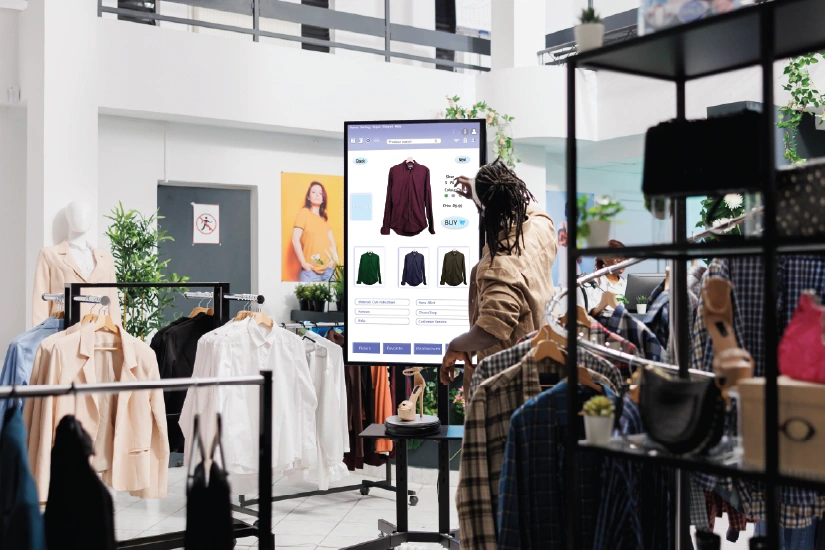









Frontend velocity, page performance, market expansion speed, and developer productivity are not problems you solve by further customising a monolith. They are problems you solve by removing the architectural constraint that creates them. Every challenge and solution below reflects a real headless commerce engagement RBMSoft has delivered on a live enterprise operation.
Challenge: 56% of organizations say they are very likely to adopt a microservices or decoupled architecture approach, a direct signal that the majority are actively trying to escape the release cycle constraints a coupled monolith creates
Solution: We decouple your frontend experience layer from your commerce backend through a clean API contract, giving your frontend engineering team full autonomy to ship, test, and iterate without a single backend dependency. New features that previously required a two-week release cycle ship in hours.
Challenge: A two-second delay in page rendering leads to an average 4% drop in conversion rate per visitor. Coupled commerce platforms constrained by server-side rendering tied to backend logic routinely add exactly that kind of latency to pages your customers are deciding whether to buy on, and that conversion loss compounds across every session, every channel, and every trading day.
Solution: We build headless storefronts on Next.js with static site generation and edge delivery, producing sub-second load times across your catalogue, search, and product detail pages. The same architecture that drives page speed also enables the A/B testing and personalization experiments that compound the conversion gain.
Challenge: Launching a new market on a monolithic platform means replicating backend configuration, content, and commerce logic for every locale, a project that costs months and delays every market entry decision your commercial team makes.
Solution: We build multi-region headless commerce architectures where new market storefronts are configured as additional frontend instances consuming the same backend commerce layer. Adding a market is a localization and content project, not a platform rebuild. Time to market for new regions drops from months to weeks.
Challenge: When your CMS and your commerce platform do not share data, your editorial team publishes content that does not surface the right products and your commerce platform serves product pages without the editorial context that drives average order value.
Solution: We connect headless CMS and headless commerce through a unified API layer, giving your content and merchandising teams a shared authoring environment where editorial and product data are always in sync, and where the same content update that publishes a campaign story also surfaces the right product recommendations in real time.
Challenge: A tightly coupled commerce platform scaled for average trading days has a ceiling. Peak events, promotional launches, seasonal sales, product drops, expose that ceiling at exactly the moment when your platform needs to perform its best.
Solution: We build headless commerce architectures on cloud-native, auto-scaling infrastructure with edge-cached frontend delivery, separating the traffic load on your storefront from the processing load on your backend commerce systems. Peak traffic events become a delivery challenge your infrastructure handles automatically, not a platform reliability incident your engineering team manages manually.
Let us show you where the constraint is and what removing it actually returns.
Every headless commerce solution engineered by RBMSoft embeds governance into the initial architecture, ensuring your platform remains protected, audit-ready, and fully compliant across all global markets in which you trade.
PCI-DSS: Our headless checkout architectures meet PCI-DSS standards at every API integration point between your frontend, payment gateway, and OMS.
CCPA: Our custom-built headless commerce platforms embed CCPA compliance at the API and data persistence level.
ADA / WCAG 2.1: We build WCAG 2.1 AA compliance into every frontend component from the design system up.
COPPA: Retailers with product categories accessible to users under 13 must embed age verification and parental consent requirements at the authentication and personalization API layer, not as a homepage checkbox.
GDPR: Consent management, data subject rights, and cross-border transfer controls are embedded at the API layer, not through a cookie banner on the frontend.
ePrivacy Directive: Behavioural tracking APIs and retargeting integrations across EU markets are built to meet consent requirements at the data collection layer, not after enforcement.
PSD2 / SCA: Strong Customer Authentication is implemented at the payment API integration layer so your checkout never produces a rejected transaction.
EU Digital Markets Act: DMA compliance obligations are embedded at the API integration level so your operation stays connected to Europe’s largest commerce distribution channels.
PDPL UAE: UAE data protection law is met at the data persistence and API processing layer, not just at the frontend consent collection point.
PDPL Saudi Arabia: Data localization under PDPL and NDMO obligations is built into your API infrastructure and cloud hosting architecture at the design stage.
PCI-DSS + MADA / SADAD: International PCI-DSS compliance and regional payment network integration for MADA and SADAD are both delivered as standard in every GCC checkout architecture we build.
Privacy Act / APPs: Personal information collected through the storefront, behavioural APIs, and personalization layers is handled in line with all thirteen Australian Privacy Principles.
PCI-DSS + EFTPOS: PCI-DSS requirements and EFTPOS network standards are both integrated at the payment API layer as a standard compliance deliverable.
WCAG 2.1 / DDA: Accessibility standards under the Disability Discrimination Act are built into every frontend component, not audited for after launch.

"The team absolutely responded to our needs."
"The most impressive part about the company is its people."
"The team delivered on time and was responsive to our needs."
"Their ability to adapt to changes and proactively manage potential roadblocks is commendable."
Every framework, platform, and API tool below has been deployed on live enterprise headless commerce operations, not selected from a vendor shortlist. This is the stack our engineers use to build, integrate, and deliver headless commerce architecture at the scale enterprise retail demands every trading day.

Commercetools

Salesforce Commerce Cloud

Adobe Commerce

Shopify Hydrogen

SAP Commerce Cloud

Elastic Path

Fabric

Bagisto/Laravel

Shopware

Prestashop
Headless CMS Platforms

Contentful

Contentstack

Sanity

Strapi

Adobe Experience Manager

Storyblok
Frontend Programming Languages

Nextjs

Javascript

Angular

React

Vue.js

Typescript

Nuxt.js

Astro
Backend Programming Languages

.NET
Java
Python
PHP
Node.js
C++
GO
Mobile
React Native

Andriod (Kotlin)

iOS (Swift)

Flutter
AI Models
Open AI
AWS
Azure
Meta LLama
Anthropic Claude
VectorDB (RAG)

Qdrant

ChromaDB

Pinecone
Agentic AI & Automation

LangChain

GitHub Copilot

LangGraph
Pinecone

Playwright

Selenium
AI/ML

TensorFLow

Meta LLaMA

Google Document AI

spaCy

Scikit-learn

Anthropic Claude

OpenAI
E-Commerce
Shopify
Adobe Commerce
Salesforce Commerce Cloud
ATG
Woo Commerce
Martech / CMS
Adobe
WordPress
Contenful
Contenful
Salesforce
Search

Algolia

Lucid works Fusion

Open Search

Coveo

Elastic Search

Constructor.io
Payment and Checkout

Stripe
Adyen

Braintree

Klarna

MADA / SADAD (GCC)

EFTPOS

PayPal Commerce
Cloud

AWS

GCP

Azure

AKAMAI
DevOps SRE

Teraaform

Jenkins

Gitlab

Github

Docker

Kubernetes

Splunk

Grafana

Prometheus

AWS Cloud watch

SumoLogic

Datadog

Azure Devops

Power BI

Tableau

Looker

GraphQL
REST APIs

Apollo Federation

Kong

MuleSoft
AWS API Gateway

Azure API Management

OAuth 2.0

OKTA

Azure Active Directory

GCP IAM

WAF

Keyklock

SAML
CDN and Edge Delivery

Cloudflare

AWS CloudFront

Fastly

Vercel Edge Network
Akamai

MySQL

Mongo DB

AWSs3

PostgreSQL
Redis

Click House

Snowflake

Redshift
Every platform below has been selected, implemented, and optimised on live enterprise commerce operations by RBMSoft engineers. We do not recommend platforms based on partnership incentives. We recommend based on the operational complexity of your specific retail stack.
We have delivered Commercetools builds for retailers managing catalogues from 5,000 to 500,000 SKUs across multiple geographies. Our Commercetools implementations cover custom product type configuration, multi-store and multi-currency setup, API extension development, and integration with your existing ERP, OMS, and loyalty systems.
We build custom Hydrogen storefronts that retain the Shopify checkout's conversion reliability while giving your frontend team complete control over the customer experience layer above it.
We build headless SFCC implementations that preserve your existing commerce logic investments while delivering the frontend velocity your team cannot achieve on SFRA.
We build Adobe Commerce headless implementations that give your team incremental migration control, decoupling your highest-traffic experience pages first while your existing Magento backend continues to operate.
We build BigCommerce headless storefronts optimised for performance and connected to your existing CRM, loyalty, and ERP systems.
We implement Elastic Path for enterprise retailers whose product and pricing complexity exceeds what catalogue-opinionated platforms can support.
We build headless SAP Commerce implementations that give your frontend team independence from the Spartacus release cycle while retaining the deep SAP ERP integration.
At RBMSoft, fabric's microservices-based commerce platform is purpose-built for enterprises migrating from monolithic architecture who need discrete, independently deployable commerce services like product, pricing, promotions, cart, and checkout rather than a full platform replacement in a single migration event.
Every AI capability below is embedded at the API orchestration layer of your headless commerce platform, connected to your live transaction data, behavioural signals, and inventory systems, and deployed by engineers who have built AI into production commerce stacks before.






Ten years of enterprise commerce delivery. Five things that differentiate every headless engagement we run.
Ten years of enterprise commerce delivery is only part of the equation. At RBMSoft, we approach headless commerce solutions development from architecture strategy through post-launch optimisation. Every engagement is built around operational reality, commercial performance, and long-term scalability, and technical deployment.
We deliver headless commerce development services through a systems-first model that aligns architecture, integration, frontend performance, AI capability, and operational governance into a single execution framework.
01
Before we decouple a single API, our engineers map every system dependency, data flow, compliance obligation, and performance baseline in your existing commerce stack. Every component in your headless architecture has a business case before the API contract is written.
02
Most headless commerce agencies spend their first engagement learning how your retail stack is wired together. Our headless commerce engineers have already built, migrated, and scaled composable architectures on the platforms and integration patterns enterprise retailers actually operate. Your onboarding documentation stays where it belongs.
03
Our pod-based engineering teams adopt your Jira boards, Slack channels, CI/CD pipelines, and coding standards from the first sprint, operating as a direct extension of your internal team. You never chase a vendor for a status update on a headless build that is already running on your critical path.
04
Our headless commerce implementations embed personalization, demand forecasting, dynamic pricing, and agentic automation directly into the API orchestration layer, connected to your live POS, OMS, and ecommerce data from day one, not as a phase two integration.
05
50+ recurring global retail clients returned for every major platform decision after their first RBMSoft engagement because the first engagement delivered a measurable outcome they could report to their board. Clients including Big Lots, DSW, and PetMeds are on the record.
We design and deliver headless commerce solutions that make scaling channels, markets, and customer experiences operationally realistic.


The best headless frontend framework depends on your backend platform and team skillset. Next.js is the most widely adopted for enterprise headless commerce, it supports static site generation, server-side rendering, and integrates natively with edge delivery networks.
React is the foundation most enterprise headless storefronts are built on, with Next.js as the production framework above it. Vue.js and Nuxt.js are strong alternatives for teams with existing Vue expertise. Shopify Hydrogen is the purpose-built option for Shopify backends. RBMSoft builds on all of these, selecting the right framework based on your platform, team capability, and performance requirements.
The primary benefits of headless commerce development for enterprise retailers are frontend velocity, page performance, personalization capability, and market expansion speed. When your frontend is decoupled from your backend, your engineering team ships storefront changes without backend deployment dependencies, your pages load faster through edge-cached static delivery, your personalization layer operates without adding server-side latency, and launching a new market storefront becomes a configuration and localization project rather than a platform rebuild. Enterprise retailers consistently report three-times faster time-to-market on headless architecture versus traditional coupled platforms.
The cost of headless commerce development depends on the scope of frontend decoupling, the number of backend system integrations, the platforms involved, and whether the engagement is a migration from an existing platform or a greenfield composable build. Focused headless storefront builds typically start from $75,000, while enterprise-grade headless commerce implementations covering full composable architecture, multi-region storefronts, AI personalization, and ERP integration range from $200,000 to over $1 million. RBMSoft provides detailed architecture scoping and fixed-milestone pricing so you know the full investment before development begins.
A focused headless storefront build on an existing commerce platform typically takes three to six months. A full composable commerce implementation covering discovery, architecture design, frontend build, API integration, AI layer implementation, compliance validation, and go-live, usually runs between six and twelve months. RBMSoft delivers an MVP headless storefront within the first eight weeks of build commencement so your team sees working software early and can influence the experience before full deployment.
Headless commerce refers specifically to the decoupling of the frontend presentation layer from the backend commerce engine through API connections. Traditional e-commerce platforms operate as tightly coupled systems where frontend experience and backend commerce logic are directly interconnected, often limiting flexibility, deployment speed, and customer experience control.
Composable commerce extends the headless model across your entire commerce stack, assembling best-of-breed microservices for commerce logic, content management, search, payment, personalization, and loyalty as independently deployable API-connected components rather than relying on a single tightly coupled platform. All composable commerce architectures are headless. Not all headless implementations are composable.
RBMSoft builds both, scoped to your operational requirements and existing platform investments.
RBMSoft builds headless commerce solutions using modern composable and API-first technology stacks selected around your operational requirements rather than vendor preference. Our core frontend frameworks include Next.js, React, Vue.js, and Shopify Hydrogen for high-performance storefront delivery. Backend and commerce infrastructure commonly includes Commercetools, Adobe Commerce Headless, Salesforce Commerce Cloud, BigCommerce Headless, SAP Commerce Cloud, and Elastic Path. For content, search, and orchestration layers, we implement platforms such as Contentful, Algolia, Stripe, and custom API middleware architectures.
Every stack is scoped against your catalogue complexity, integration landscape, performance requirements, and long-term scalability goals.
Yes. RBMSoft integrates AI directly into headless ecommerce architectures through API orchestration layers, embedding personalization, intelligent search, product recommendations, demand forecasting, dynamic pricing, merchandising automation, and behavioural analytics into live commerce environments.
Our engineers deploy AI and MLOps infrastructure connected to real-time ecommerce, OMS, CRM, ERP, and customer behavioural systems from initial architecture design rather than treating AI as a future add-on. This allows enterprise retailers to operationalise AI across customer acquisition, conversion, retention, and revenue optimization from launch.
Vision. Expertise. Results.
Our team guarantees exceptional results.
We've streamlined processes to maximize efficiency.
We are the trusted choice for repeat clients worldwide.